
Guides & Advice
How to Remove Stains from Leather Without Leaving a Ring
Sep
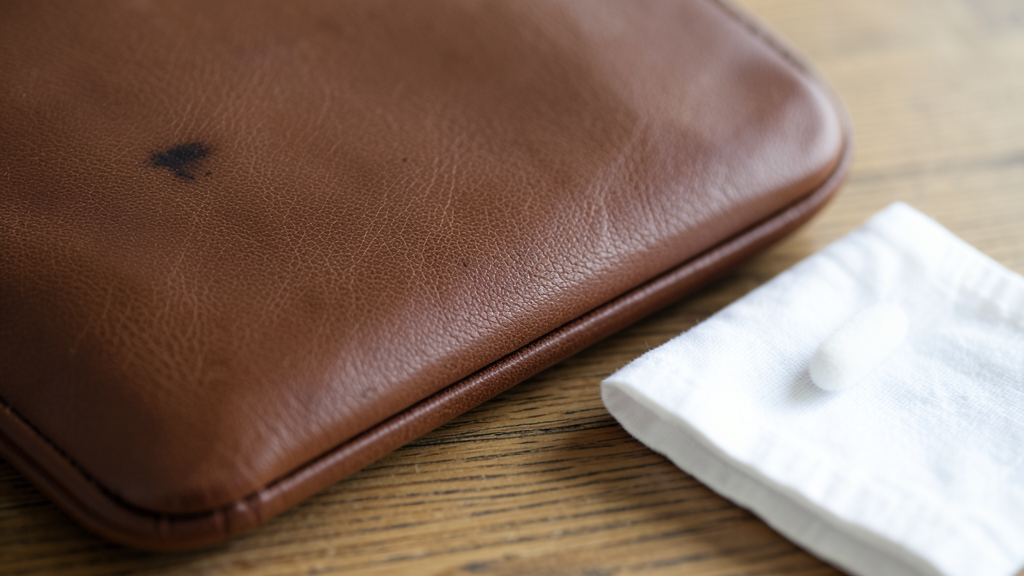
How to remove stains from leather comes down to one decision made before you touch anything: does the leather have a pigmented finish, or is it raw? A finished hide keeps the stain on the surface, where mild soap works. Raw, aniline or oiled leather drinks the stain, and water makes it worse. Test first, then treat, whether it is a leather messenger bag, a wallet or a jacket.
Test the finish before you treat anything
Suede and nubuck are a third category and follow neither rule. Their surface is standing fibre, not a film: no soap, no conditioner, only powder and a crepe brush to lift the nap again. Grease shows there as a flattened, shiny patch long before it looks dark.
Put one drop of water in a hidden spot, inside a flap or under the strap. If it beads for thirty seconds, the hide is pigmented and protected. If it sinks in and darkens, the hide is raw and porous, and every liquid you apply will leave an edge.
Our own catalogue tells the same story from the supply side: of 1,167 published bags, 348 are leather and 464 are nylon. The nylon ones forgive a damp cloth. The leather ones decide everything by that single drop, which is why the test costs thirty seconds and saves a bag. More on grain types in our guide to suede vs nubuck.
Match the method to the stain
| Stain | What it looks like | Method |
|---|---|---|
| Grease, oil, butter | dark halo, darker than the hide | dry absorbent powder, no water |
| Water | pale ring at the edge of the wet patch | re-wet the whole panel, dry slowly |
| Ink | sharp coloured line | 70 percent alcohol, pigmented leather only |
| Wine, coffee | brown ring, sticky when fresh | blot, then mild soap on pigmented leather |
| Mould | white or green bloom, cellar smell | diluted white vinegar, then dry fully |
Ink has its own rules and its own page, how to remove ink from leather. Everything else is covered below.
Grease and oil, the dry method
Judge the timing generously. Butter caught the same evening lifts overnight; three week old salad oil takes two or three powder cycles a day apart. Each cycle pulls out a fraction, and it is the sum of them that clears the halo, not the strength of any single product.
- Blot the excess with paper, working from the edge inwards. Never rub.
- Bury the mark under a thick layer of cornstarch, talc or fuller’s earth.
- Leave it four hours minimum, overnight on pale leather or an older stain.
- Brush the powder off with a soft brush, following the grain.
- Repeat if the halo faded without clearing. Two cycles beat one harsh product.
- Condition the panel once it is dry, to replace the oils the powder pulled out.
Powder works by capillary action, drawing the grease up and holding it. That slowness is exactly why it beats detergent, which thins the grease and pushes it deeper. The final step is covered in our guide on how to condition leather.
Water marks, wine and coffee
Road salt behaves the same way in winter, leaving a white tidemark along the bottom of bags set down on the ground. Lift it with lukewarm water and a splash of vinegar across the whole lower panel, never by scrubbing the tidemark alone, or you trade a white line for a pale patch.
A water ring is not caused by the water but by its edge, where drying concentrates salts and dust into a line. The fix sounds wrong and works: lightly dampen the entire panel with a barely wet cloth, then dry it flat, slowly, away from any heat source. The ring blends back into the whole.
Wine and coffee are water stains carrying pigment. Blot immediately, never rub, then treat the panel as a water mark once the liquid is lifted. On pigmented leather, a drop of pH neutral soap on a damp cloth clears what remains. On raw leather, accept a faint shadow rather than chase it with solvent, and let the leather patina absorb it over the following months.
What ruins leather faster than the stain
Dye transfer from raw denim belongs in its own category: the blue sits in the top layer of a pale hide and no solvent removes it without taking the finish too. Prevention is the only real answer, which means conditioning pale leather twice a year so the surface stays closed.
- Dish soap: it strips the hide along with the stain and leaves it dry and dull.
- Hot water: it opens the pores and drives grease deeper.
- Undiluted vinegar: useful on mould, aggressive on everything else.
- Hair dryers and radiators: heat sets the stain and shrinks the grain.
- Melamine sponges: they are abrasive, and they flatten the finish permanently.
- Baby wipes: the alcohol and surfactants lift colour from pigmented leather.
On a full grain leather briefcase, these leave a lighter patch that reads far worse than the original mark, and no conditioner brings the colour back.
When to stop and pay someone
Three cases justify a leather specialist over another attempt: an old grease stain on pale leather, a ring on a highly visible panel, and any bag worth several times the price of the repair. A professional has solvents matched to each finish and an airbrush to rebuild colour. Expect roughly twenty to fifty euros for a localised retouch, and ask what it does to the patina before agreeing, because airbrushing evens out the colour and erases the age with it. Routine care in between is covered in how to clean a leather bag.
Leathers that forgive the most
- Leather messenger bags: smooth finishes that keep stains on the surface.
- Leather briefcases: fabric lined, so spills inside stay off the hide.
- Leather wallets: small panels, quick to treat and quick to condition.
Conclusion
Test the finish with one drop of water, then pick the method: powder and patience for grease, a re-wet panel for water rings, soap only on pigmented hides. Skip the household hacks, and hand pale leather to a professional rather than risk a bleached patch. For a bag that takes daily use without showing every accident, start with our leather messenger bags.
FAQ
How long should the powder sit on a grease stain?
Four hours at the very least, overnight for older marks or pale hides. Powder works slowly, and impatience is the usual reason it fails.
Does saddle soap remove stains?
Saddle soap cleans soiling, not stains. On raw leather it also darkens the panel it touches, so use it on the whole surface or not at all.
How long before a stain becomes permanent?
Grease migrates through the thickness for the first forty-eight hours, then settles. After a month on raw leather, aim to fade it rather than remove it.
Can a stain be removed completely?
Usually on pigmented leather, rarely in full on raw leather. What remains blends into the patina, especially on darker colours.
Is it worth treating a stain on a cheap bag?
Powder and a soft brush cost almost nothing and risk almost nothing, so yes. Paying for professional work only makes sense above roughly a hundred euros of value.
