
Guides & Advice
How to Remove Ink from Leather Without Ruining the Grain
Sep
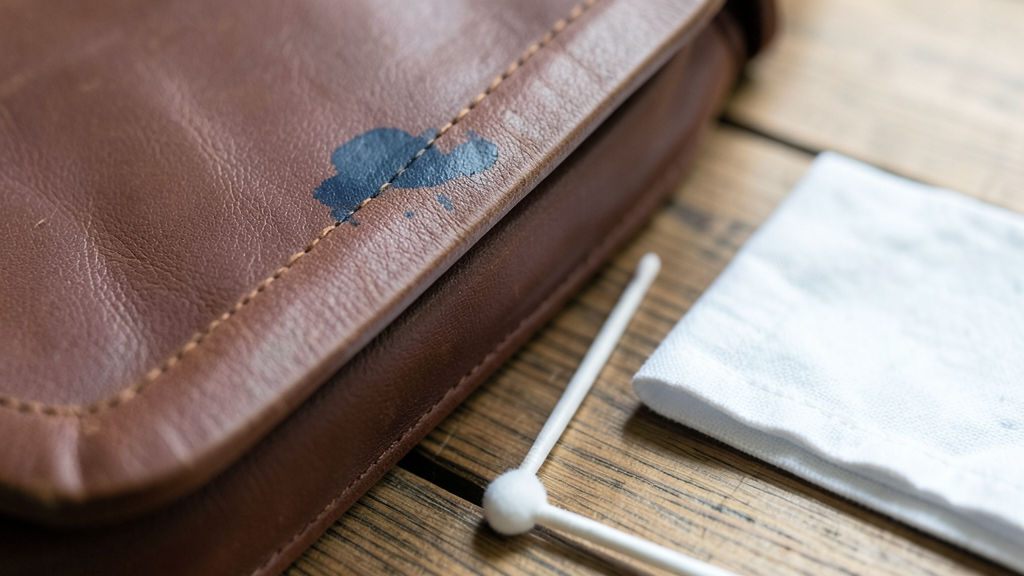
How to remove ink from leather depends on two things: how fresh the stain is, and whether the leather has a protective finish. On smooth, pigmented leather, a cotton swab barely dampened with 70% rubbing alcohol often lifts ballpoint ink in minutes, dabbed from the edge toward the center. On bare leather, full grain or oiled, the ink sinks into the pores and your options narrow fast. Before you touch your leather messenger bag, identify the leather and the ink: that decides the method.
Contents
This guide follows the order of the job, from the patch test to the final conditioning, and links back to our guide on how to condition leather.
- Test the leather before you rub anything
- Removing a fresh ink stain
- Which method for which ink
- Old or set in ink stains
- Patch test first, and where to do it
- Bag leather and sofa leather are not the same
- Special cases: light leather, oiled leather, lining
- After treating: condition, sometimes recolor
- Calling a professional: when, and what it costs
- Hacks that ruin leather
- How long ink takes to set, and why speed wins
- Preventing the next stain
- Our easiest leathers to care for
- Conclusion
- FAQ
Test the leather before you rub anything
Put one drop of water in a hidden spot, under a flap or inside a pocket. If it beads and sits on top, the leather carries a pigmented finish: the ink is sitting on that finish and you can work on it. If the drop soaks in and darkens the spot, the leather is bare or aniline, every product you use will sink in too, and a ring mark becomes a real risk. Most dress bags, including a structured leather briefcase, fall in the first group. PU leather behaves like pigmented leather: ink stays on the coating.
Removing a fresh ink stain
A stain less than an hour old comes out without harsh products. Order matters:
- Blot the excess with paper towel. Do not rub, or you will spread it.
- Dab with a white cloth, lightly damp with water and a drop of mild soap.
- If a mark remains on pigmented leather, touch it with a swab moistened with 70% alcohol, a little at a time.
- Wipe the area with a damp cloth, then let it air dry away from heaters.
- Once dry, condition the treated spot with a neutral leather balm.
Alcohol dries leather out. Never flood the area, and never use it on bare leather without a patch test. Our guide on how to condition leather covers the aftercare step by step.
Which method for which ink
| Ink type | What works | What to avoid |
|---|---|---|
| Ballpoint pen | 70% alcohol, dabbed; a leather eraser | rubbing in circles, which smears the paste |
| Gel or rollerball pen | lukewarm soapy water, then light alcohol | waiting, water based ink soaks in fast |
| Permanent marker | a leather cleaner with a mild solvent | acetone, which dissolves the finish |
| Fountain pen ink | clean water right away, then drying | strong alcohol on light leather |
Ballpoint is by far the most common stain on a work bag, a leather briefcase above all: a pen left uncapped in an inside pocket marks the lining first, then sometimes bleeds through to the leather.
Old or set in ink stains
After a few days, the ink has dried inside the grain. Home methods can only fade it, and they fade the leather color around it at the same time. Two sensible routes are left: an ink specific leather cleaner applied in thin coats over several days, or a leather repair shop that can recolor the area. On dark leather, a faded mark often blends into the patina within months. For grease and water marks, which call for a different approach, see how to clean a leather bag.
Patch test first, and where to do it
A patch test takes two minutes and saves you from a permanent ring. Pick a hidden spot: under a flap, inside a pocket, beneath the strap, never the front panel. Put one drop of whatever you plan to use on a cotton swab, wait five minutes, then blot with a dry white cloth. Three things tell you what you need to know. If the cloth picks up color, the leather is bleeding dye and the product is too strong. If the spot dries matte or lighter than the rest, the finish has been stripped. If nothing changes, go ahead and treat the stain.
Work in daylight, never under warm lamp light that hides color shifts. Lay the bag flat, slide a piece of card or paper towel behind the panel so nothing soaks through to the lining, and keep a second dry cloth in reach to stop the product as soon as the mark fades. Our guide on how to condition leather covers what comes after.
Bag leather and sofa leather are not the same
Most ink advice online is written for furniture. A sofa carries a thick pigment layer and a protective topcoat, built to survive cleaning products and daily rubbing. A messenger bag, a briefcase or a wallet is finished far more lightly, to keep the hand and the grain. The same cleaner that is safe on a couch can lift color off a bag.
The practical rule fits in one line: the softer, more matte and more supple the leather, the more careful you must be. Stiff, glossy leather takes more. Suede and nubuck sit outside this entirely, as our guide on suede vs nubuck explains: there is no smooth surface, ink sinks between the fibers, and no liquid pulls it back out. On those two, brush dry with a suede eraser and stop there.
Special cases: light leather, oiled leather, lining
- White, beige or taupe leather: any ring shows. Blot with soapy water, dry, and stop as soon as the mark fades. A leather shop can recolor the spot.
- Oiled leather, sold as crazy horse: the surface moves under your thumb. Rub fresh ink with a warm fingertip and no product at all, and the displaced wax often closes the mark.
- Black or dark brown: you have room to work, but alcohol lightens the tone. Condition afterwards to even it out.
- Patent leather: the surface is a plastic film. A damp cloth is enough, and no solvent should come near it.
- Fabric lining: ordinary stain remover works, with paper towel protecting the leather around it.
After treating: condition, sometimes recolor
Even a successful clean strips oils from the hide. Let the area air dry away from heat for at least two hours. Then work a colorless balm in with a cloth, thin, across the whole panel rather than the stain alone: that is what prevents a lighter halo around the cleaned spot. Leave it overnight, then buff with a soft cloth.
If a shadow remains, you have two options. A tinted recoloring cream, sold by shade, goes on in very thin coats and evens the panel out. A leather repair shop can also airbrush the area, usually for twenty to fifty euros depending on size, far below the price of the bag. On leather that ages, waiting is often the best call: a faded mark blends into the patina within a few months of use.
Calling a professional: when, and what it costs
Three situations justify handing the bag over instead of pushing further. Ink on light leather, where every attempt leaves a visible ring. An old mark sitting on a panel everyone sees. And a stain on a bag worth far more than the repair.
A professional has two things you do not: solvents dosed for each type of finish, and an airbrush that recolors without visible thickness. Spot repairs usually run twenty to fifty euros, a full recolor sixty to one hundred and twenty depending on the size of the piece. Ask to see a photo of a comparable job before you leave the bag, and check that the shop actually works on leather bags, not only shoes.
Hacks that ruin leather
- Acetone and nail polish remover strip the ink and the finish along with it.
- Hairspray works through its alcohol, but the resins leave a sticky, dull film.
- Milk and toothpaste leave greasy or abrasive residue behind.
- Melamine sponges are abrasive and scratch the grain.
These tips spread because they work on heavily pigmented sofa leather. On a men’s leather messenger bag with a natural grain, they leave a pale patch that shows more than the ink ever did.
How long ink takes to set, and why speed wins
Ballpoint paste sits on the surface for the first hour, then the oils carrying the pigment start migrating into the grain. Water based gel ink moves faster, within minutes on unfinished leather. Permanent marker bonds to the finish itself within a day. That is why the single biggest factor in the result is not the product you pick but how fast you reach for it.
Keep a small kit where you carry your leather bag, in a desk drawer or a car glovebox: a few cotton swabs, a white microfiber cloth, a travel bottle of 70 percent alcohol and a tube of colorless balm. Thirty seconds of blotting beats an hour of scrubbing a week later, and it costs the leather far less.
Preventing the next stain
Keep pens capped, in a dedicated pocket, tip up. A water repellent balm twice a year slows any stain down and buys you a few extra minutes. On most bags, inside pockets are lined with fabric, so the lining takes the ink first, and fabric is far easier to clean than leather. A men’s leather wallet sharing a jacket pocket with a pen is the second most common case.
Our easiest leathers to care for
- Leather messenger bags: smooth finishes that keep ink on the surface.
- Leather briefcases: fabric lining and separate pen slots.
- Leather wallets: small surfaces, quick to treat and condition.
See all leather messenger bags
Conclusion
Removing ink from leather is quick when you act early: soapy water first, light alcohol on pigmented leather, never acetone. On bare leather or an old stain, fade it rather than force it, and hand it to a pro if it has to disappear completely. For a bag that forgives small accidents, browse our leather messenger bags with smooth finishes.
FAQ
Does rubbing alcohol damage leather?
In small amounts on pigmented leather, no. Used generously or on bare leather, it dries the grain and lightens the color. Always condition the spot afterwards.
How long do I have before ink sets?
Water based ink sinks in within minutes, ballpoint paste within hours. After a full day, it rarely comes out completely.
Can you get ink off white or beige leather?
It is the trickiest case, since any ring shows. Dab with soapy water, then take it to a leather specialist if it resists.
Is ink on the lining treated the same way?
No. Fabric lining handles regular stain remover and alcohol. Just protect the leather around it with paper towel while you work.
