
Guides & Advice
Leather Patina: Which Leathers Age and How Long It Takes
Sep
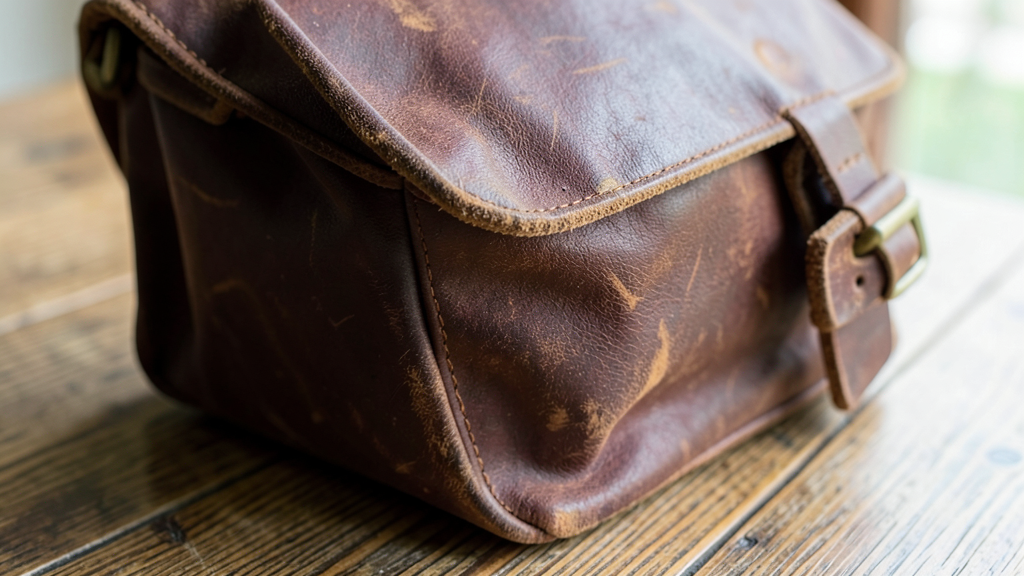
Leather patina is the mark time leaves on tanned hide: the color deepens in places, the surface gains a soft sheen, and the most handled areas turn darker than the rest. It is not wear and it is not a flaw. It is how a natural material reacts to light, hands and friction. On a leather messenger bag carried every day, it starts showing within months.
What actually happens in the hide
Three things overlap. Oils and waxes from tanning migrate to the surface under heat and rubbing, which smooths and polishes. Tannins react to daylight and darken, much like skin tanning. On top of that, natural oils from your hands, dust and rain add microscopic layers. The result belongs to one object only: two identical bags carried by two people never patina the same way. That is what makes a leather briefcase recognisable after a couple of years.
Which leathers patina, and which never will
- Vegetable tanned full grain leather patinas fastest and most visibly.
- Oiled cowhide, often sold as crazy horse, darkens and lightens at every fold.
- Pigmented leather, sealed under a finish coat, barely patinas at all.
- Corrected grain and coated leather do not patina: the grain surface is gone.
- Synthetic leather never patinas. It wears, then cracks.
If patina matters to you, check the leather type before the color. A full grain leather with no pigment coat is the only reliable way to watch a bag evolve.
How long before you see it
On light vegetable tanned leather carried daily, the first shifts appear in four to eight weeks: corners and the handle darken first. By six months the contrast is obvious. After two years the original color survives only under flaps and inside pockets, which is the best place to judge how far the bag has come. On dark or pigmented leather, years can pass with almost nothing to see. A leather crossbody bag worn against the hip moves faster than a bag carried by hand.
Helping patina along without ruining it
A good patina needs few gestures, but regular ones. Wipe dust off with a dry cloth weekly, and let the leather dry in open air after rain, never near a radiator. Condition twice a year with a neutral balm, in a thin coat: too much product saturates the grain, evens out the tone and kills the very contrast you were after. Give the bag daylight rather than direct sun, which burns light shades. For the full routine, see how to condition leather.
What our catalogue shows
Across our 1 109 products, 38 are cowhide and 33 are full grain, the two families that genuinely patina. Our oiled leather models, usually described as crazy horse, are the ones customers mention most in reviews after a few months of use: scratches fade when rubbed with a finger, and every fold keeps a lighter mark. Models in PU leather keep their day one look until the day they fail.
Our leathers that age well
- Leather messenger bags: patina shows first on corners and the strap.
- Leather briefcases: the flap shields the panel underneath, creating sharp contrast over the years.
- Leather crossbody bags: the most handled surfaces darken fastest.
See all leather messenger bags
Conclusion
Patina is not a maintenance task to get right, it is a way of using an object: full grain leather carried often and conditioned rarely evolves on its own, and that is what separates a natural material from a coating. To see that happen, pick unpigmented leather and keep a light hand with care products. See our leather messenger bags chosen with that in mind.
Frequently asked questions
Can a patina go wrong?
Yes, when a grease stain settles on a light area or when conditioner is applied too heavily. The tone then turns uneven with no relation to how the bag is carried.
Can you speed patina up?
Daylight and regular use are enough. Fast methods, heat or heavy oiling, dry the grain out and shorten the life of the leather.
Does patina protect leather?
Partly: the layer of waxes and oils slows water from soaking in. It does not replace conditioning twice a year.
Can you remove a patina that got too dark?
Not without stripping the grain, which damages the hide. Better to even things out by conditioning the whole bag, including the areas that stayed light.
