
Guides & Conseils, Sacoche Homme
How to Dye Leather: Step-by-Step Guide for Bags and Wallets

Sep
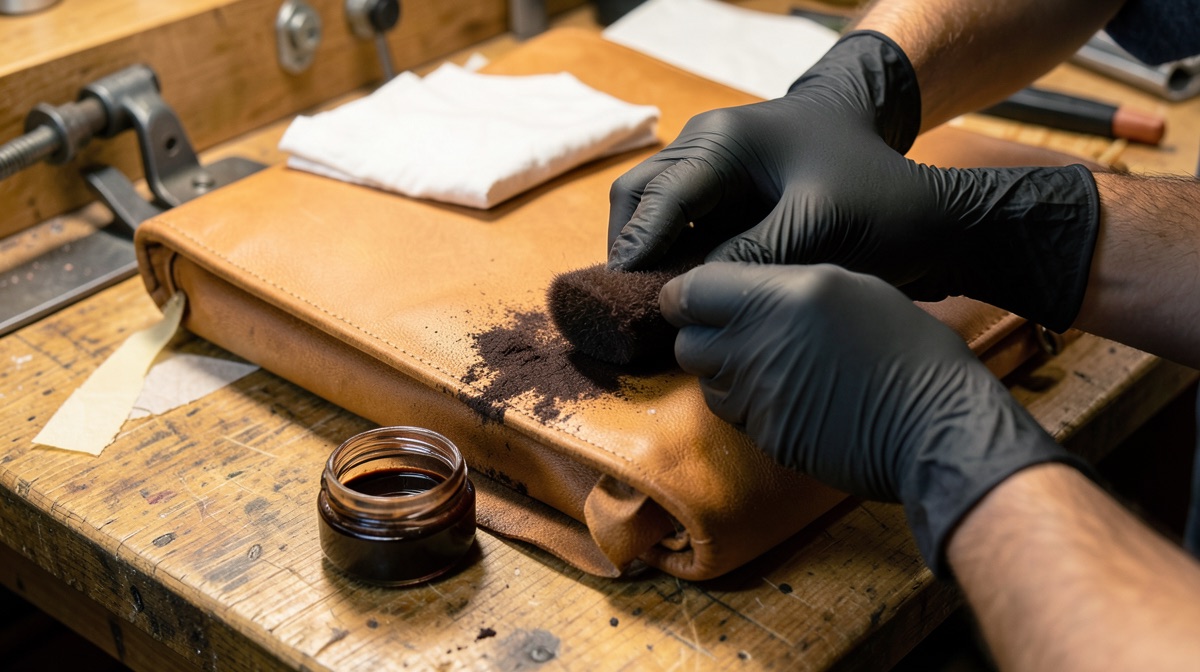
How to dye leather in one sentence: strip the factory finish, apply thin coats of leather dye with a wool dauber, buff, then condition and seal. The result depends less on the dye than on the leather you start with. Smooth, absorbent leather takes color evenly; coated or synthetic surfaces do not, and some need paint instead. This guide covers which leathers can be dyed, the tools, each step from deglazing to sealing, how far you can change a color, and when a recoloring balm or leather paint is the better choice. If your bag is beyond saving, our men’s leather bags come in brown and black, ready to develop their own patina.
Key points
- Dye only goes darker: tan can become brown or black, black cannot become tan.
- Remove the finish first with a deglazer, otherwise the dye sits on top and rubs off.
- Several thin coats give a more even color than one heavy coat.
- Synthetic and heavily coated leather needs leather paint, not dye.
- Always seal the dyed leather, especially on a bag that rubs against clothes.
In this guide
- Can you dye leather? Check the type first
- What you need to dye leather
- How to dye leather step by step
- Going darker, lighter or black
- Dye, paint or recoloring balm
- How to dye suede and nubuck
- Aftercare: sealing, rub-off and patina
- Frequently asked questions
Can you dye leather? Check the type first
Yes, most genuine leather can be dyed, but not all of it takes dye the same way. Dye is absorbed by the fibers of the hide, so the more open the surface, the deeper and more even the color. Our guide to the types of leather explains the finishes in detail; for dyeing, they fall into four groups:
- Vegetable tanned and aniline leather: the easiest to dye. The surface is open and drinks the dye. Vegetable tanned leather is what leatherworkers dye by hand.
- Full grain and top grain with a light finish: dyeable once the finish is removed. Expect to need a second coat.
- Corrected grain and pigmented leather: the color is in a surface coating. Dye struggles to get through, so the result is often patchy. A pigmented recoloring product works better.
- PU, bonded and patent leather: a polyurethane or varnish layer covers the surface, so dye has nothing to soak into. PU leather is a material in its own right, and it is recolored with a flexible leather paint made for coated surfaces.
To test, put one drop of water on a hidden spot. If it darkens the leather and soaks in within a minute, dye will penetrate. If it beads on the surface, there is a finish to strip, or the material calls for paint.
What you need to dye leather
The kit is short and inexpensive. Work in a ventilated room, because spirit based dyes and deglazers give off strong fumes.
- Leather deglazer or preparer, to remove the factory finish and old wax.
- Leather dye: spirit based dyes penetrate deeply and dry fast; water based dyes smell less and are easier for beginners.
- Wool daubers or a lint free cotton cloth, plus a small brush for seams and edges.
- Nitrile gloves, because dye stains skin for days.
- Masking tape to protect metal hardware, zips and stitching you want to keep.
- Leather conditioner and a finisher or sealant for the last steps.
Dyeing dries the leather out, so the conditioner is not optional. The same products and gestures are explained in our guide on how to condition leather.
How to dye leather step by step
The method below works for a bag, a wallet or a belt. Take your time on the first two steps: they decide how even the final color will be, whatever the quality of the hide, from full grain leather to a more corrected surface.
- Empty and clean the item. Remove everything from the pockets, then wipe the surface with a damp cloth and a little leather cleaner to lift dust and grease. Let it dry.
- Deglaze. Rub the deglazer over the whole surface with a cloth until the shine disappears. A matte, slightly dry look means the finish is gone. Let it evaporate completely.
- Protect what stays. Tape over buckles, zips and any contrasting stitching. Dye will color thread as easily as leather.
- Test on a hidden spot. The inside of a flap or the underside of a strap shows the real color, which is often darker than the bottle suggests.
- Apply the first coat. Load the dauber lightly and work in small overlapping circles, panel by panel, without stopping in the middle of a panel. Stopping leaves a darker line where the wet edge dries.
- Do the edges and seams. Use the small brush along seams, gussets and folds, where the dauber cannot reach.
- Let it dry, then add coats. Leave the first coat to dry fully, at least a few hours, then add a second and, if needed, a third. Thin coats build color without leaving a crust.
- Buff off the excess. Once dry, rub firmly with a clean cloth until no more color comes off. This step prevents most of the rub-off people complain about.
- Condition, then seal. Apply conditioner to put back the oils the solvent removed, then a finisher to lock the color in.
Going darker, lighter or black
Dye is transparent: it adds to the color already there. That rule decides what is possible.
- Same color, refreshed: the easiest job. One coat of matching dye, or a recoloring balm, revives faded corners and scuffs.
- Darker: tan to brown, brown to dark brown, any color to black. This is what dye does best.
- Lighter: not possible with dye. You need to strip the color chemically, which rarely gives a clean result on a finished bag, or cover it with an opaque leather paint.
- Black: the end of the line. Once a bag is dyed black it stays black or dark, so be sure before you start.
We recommend dyeing a bag black only when you are sure, because it is the one change you cannot undo. Our own range shows why most people dye toward black: of the 332 leather bags in our catalogue on October 4, 2026, 278 are listed in black and 184 in brown, many in both. Black and brown are the colors men keep and carry. If you would rather not risk your bag, our black leather bags for men and brown leather bags for men give you the finished color from day one.
Dye, paint or recoloring balm
Three products change the color of leather, and they are not interchangeable. Scratches are a separate problem: our guide on how to fix scratched leather covers them before any recoloring.
| Leather dye | Leather paint | Recoloring balm | |
|---|---|---|---|
| How it works | Soaks into the fibers | Forms a flexible layer on top | Pigmented cream rubbed into the surface |
| Change of color | Darker only | Any color, lighter included | Same or very close color |
| Best on | Vegetable tanned, aniline, deglazed full grain | Coated, pigmented and PU surfaces | Faded or scuffed finished leather |
| Look | Natural, grain visible | Opaque, can look plastic if too thick | Natural, light coverage |
| Difficulty | Medium | Medium, many thin coats | Easy |
For a faded bag that you like as it is, start with a balm. For a real change toward a darker shade, dye. For a lighter color, or a synthetic material, paint.
How to dye suede and nubuck
Suede and nubuck are leather with a brushed surface, and they take dye easily, sometimes too easily. Use a dye made for suede, often sold as a spray or with a sponge applicator, so the nap stays soft. Brush the surface before and after each coat to lift the fibers, and keep coats light, because suede darkens a lot and cannot be lightened afterwards. Clean the item first: our guide on how to clean suede explains how, and the difference between the two finishes is in what is nubuck.
Aftercare: sealing, rub-off and patina
Freshly dyed leather can transfer color onto a shirt or a car seat, especially when it gets wet. Three habits prevent it. Buff until the cloth comes away clean before sealing. Apply the finisher in two thin coats rather than one thick one. Then wait a full day before using the bag against light clothing.
After that, treat it like any good leather: clean with a soft cloth, condition every few months, and keep it out of direct heat. Our guide on how to clean a leather bag covers routine care. Dyed vegetable tanned leather keeps evolving with light and handling, and that slow darkening is the leather patina collectors look for.
Leather bags that age well
Dyeing is a good rescue for a bag you love. If you are starting again, these are the families to look at:
- See men’s leather bags: our widest choice of leather crossbody and shoulder bags.
- See leather messenger bags for men: a flap bag that takes a patina with use.
- See brown leather bags for men: brown shades, from light to dark.
- See men’s leather wallets: small leather goods that pair with your bag.
Conclusion
Dyeing leather works when the surface can absorb the color and you only want to go darker: clean, deglaze, apply thin coats, buff, condition and seal. If the leather is coated or synthetic, or if you want a lighter shade, choose leather paint; if the color is only faded, a recoloring balm is enough. For routine care after the job, read how to condition leather, and for a new bag in the right color, browse our men’s leather bags.
Frequently asked questions
Can you dye leather a lighter color?
Not with dye, which is transparent and only adds color. To go lighter you must either strip the existing color with a chemical stripper, which is risky on a finished bag, or cover it with an opaque leather paint.
How long does leather dye take to dry?
A thin coat feels dry to the touch fairly quickly, but leave it several hours before the next coat and a full day before using the item. Spirit based dyes dry faster than water based ones; humidity and thick coats slow both down.
Does leather dye rub off?
It can if the excess is not buffed away or the leather is not sealed. Buff until the cloth stays clean, apply a finisher, and the color stays put in normal use.
Can you dye a leather bag at home?
Yes, a bag in smooth, genuine leather can be dyed at home with a deglazer, a dye, daubers, conditioner and a finisher. Bags with complex seams, light colored stitching or a valuable designer finish are safer with a professional leather restorer.
Is it better to dye or paint leather?
Dye keeps the natural look and grain of the leather and suits a move toward a darker shade. Paint covers completely, allows lighter colors and is the only option on PU and heavily coated leather.
