
Guides & Advice
What Is Nubuck? The Leather That Is Not Quite Suede
Sep
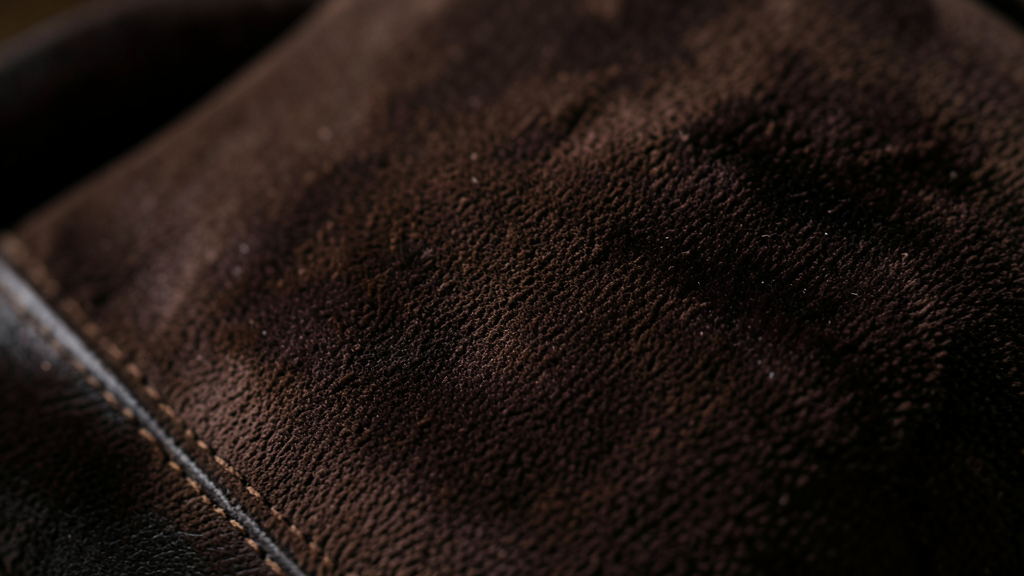
Nubuck is leather sanded on its outer face, the grain side, which gives it a velvet hand while keeping the strength of the top layer. That is what separates it from suede, sanded on the inner face: softer, and far less durable. The difference is visible to the naked eye and decides how you care for it, on shoes as on a leather messenger bag.
Nubuck, suede and velvet leather
Sales vocabulary adds to the confusion: many shops write velvet leather without saying which face was worked, and some use suede for anything that is not smooth. Faced with a vague product page, the only reliable detail is the sanded face, or failing that a close photograph of the nap itself.
| Material | Sanded face | Look and durability |
|---|---|---|
| Nubuck | outer face, grain side | very short dense nap, hard wearing |
| Suede | inner face, flesh side | longer nap, soft, fragile |
| Velvet leather | a sales term | means either one, depending on the seller |
One gesture tells them apart: run a fingernail against the nap. On nubuck the mark is fine and wipes away with a fingertip. On suede it is wider and the pile visibly lies down. Our comparison piece on suede vs nubuck goes further on how each one ages.
Why nubuck outlasts suede
Nubuck keeps the top layer of the hide, the densest in fibre. Sanding removes only a fraction, just enough to raise a short nap. Suede is taken from below that layer: naturally softer, but far less resistant to abrasion and stretching.
In practice, a nubuck bag takes strap rub and table corners much better than a suede one, which glazes and flattens in the same places. That is why nubuck turns up on hiking boots and work bags, while suede stays on dress pieces, a split covered in our guide on how to condition leather.
Sanding has a second consequence, less often mentioned: it opens the surface. Smooth leather carries a natural film that beads water for a few seconds; nubuck absorbs on contact. Which is why a protector spray is not a nicety but a first step, applied before the first wear rather than after the first stain.
Caring for nubuck without ruining it
Nubuck also takes dye differently from smooth leather. Because the surface is open fibre rather than a closed film, colour sits deeper and fades more evenly, which is why an old nubuck looks worn rather than patchy. It also means a recolouring spray covers the texture and flattens the nap, so it is a last resort rather than routine care.
- Let the piece dry completely before brushing anything.
- Brush with a crepe brush, one direction only, to lift the nap and free the dust.
- Erase glazed patches with a suede eraser, in short strokes.
- Treat grease with absorbent powder, never with water or soap.
- Reproof in two thin coats, on a clean and dry piece.
Anything liquid applied to one spot leaves a ring: that single rule governs the material. The stain by stain detail sits in our guide on how to clean suede, which applies to nubuck with slightly firmer brush pressure.
Budget ten minutes for a bag, twenty for a pair of shoes. Nubuck care is short but SEQUENTIAL: each step sets up the next, and erasing before brushing grinds dust into the pile instead of lifting it out.
What ruins nubuck in one go
- Soapy water on one spot: it clumps the nap and dries with a hard ring.
- Wax polish made for smooth leather: it clogs the pile for good.
- Hair dryers: heat shrinks the skin and sets the nap flat.
- Cleaning wipes: the alcohol bleaches the surface in patches.
- Washing machines: they crush the pile and harden the hide, with no way back.
A word on steam, often recommended: a few seconds over a pan of hot water does raise the nap before brushing, but only a few. Held longer, steam soaks the skin and causes exactly the damage you were avoiding, plus a distortion as it dries, the same failure described in how to soften leather.
Spotting real nubuck before you buy
Three checks work in a shop or on arrival. The nap first: short, even, it shifts shade as your hand passes, exactly like velvet. The edge next: real nubuck shows the full thickness of hide, with no foam layer or woven backing. The smell last, frank and animal, which no imitation truly reproduces, unlike the coated hides in our leather patina guide.
Synthetic nubuck, usually sold as microfibre, gives itself away by a perfectly uniform nap and an edge revealing a textile backing. It also takes soapy water, which real nubuck does not tolerate: that is the simplest test of all, done on a hidden area.
One last marker, often decisive: colour regularity. A genuine hide shows slight variation from place to place, because it came from an animal. A surface perfectly even everywhere, without the faintest shift, almost always signals a synthetic backing, however well imitated.
Leathers built for daily use
- Leather messenger bags: smooth finishes, simple to care for.
- Leather briefcases: full grain hides with a covering flap.
- Leather wallets: small panels that wipe clean in seconds.
Conclusion
Nubuck is full grain leather sanded smooth: tougher than suede, more demanding than a finished hide. Brush dry, erase the glazed patches, keep water off single spots, and reproof twice a year. For a bag that asks less of you, start with our leather messenger bags.
FAQ
What is the difference between nubuck and suede?
Nubuck is sanded on the grain side, suede on the flesh side. Nubuck has a short nap and wears better; suede is softer and more fragile.
Does nubuck handle rain?
Poorly, like every napped leather. A protector spray buys minutes, never immunity, and it needs redoing twice a year.
Can nubuck be cleaned with water?
Only misted across a whole panel, never on one spot. A single damp area dries with a ring more visible than the stain itself.
How do I fix a shiny patch?
Suede eraser in short strokes, then brushing against the nap. Older glazing takes two or three passes.
Does nubuck develop a patina?
Not really. It wears rather than patinas: the nap lies down where it is handled and the colour deepens there, without the sheen smooth leather takes on.
