
Guides & Advice
How to Clean Suede Without Leaving a Single Water Ring
Sep
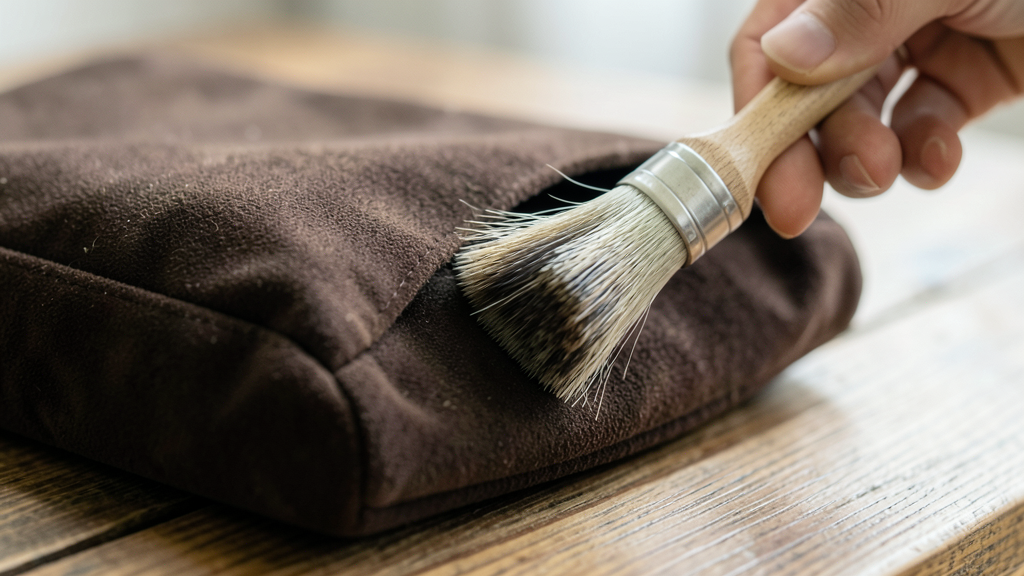
How to clean suede, in order: crepe brush, suede eraser, then absorbent powder on grease. Water comes last, and only across a whole panel, never as a spot treatment. Suede has no protective film, just raised fibre, so anything wet applied to one small area dries into a ring. The same rules apply to shoes, jackets and the suede trim on a leather messenger bag.
Suede, nubuck or microfibre: know what you have
Suede is the inner split of the hide, buffed to raise a soft nap. Nubuck is the outer grain buffed instead: shorter pile, denser, and noticeably tougher. Both clean the same way, with nubuck taking firmer brush pressure. Our guide to suede vs nubuck covers how they age differently.
Synthetic suede, sold as microfibre or suedette, is a third case: it takes soapy water and cleans like fabric, which real suede does not tolerate. The label settles it. Failing that, a drop of water left for a minute marks animal suede lastingly and vanishes without trace on microfibre.
Four tools, and nothing else
| Tool | What it does | How to use it |
|---|---|---|
| Crepe brush | lifts the nap, removes dust | strokes in one direction only |
| Suede eraser | clears shiny patches and dry marks | light rubbing, then brush |
| Fuller’s earth or cornstarch | absorbs grease | cover, leave overnight, brush off |
| Suede protector spray | delays the next stain | two thin coats from 20 cm |
An old toothbrush stands in for the crepe brush on a small area, and a clean white pencil eraser stands in for the suede one. Nothing substitutes for the powder, though: it is the only thing that lifts grease without spreading it, as covered in our guide on how to remove stains from leather.
The full method, step by step
- Let the piece dry completely if it is damp. Brushing wet suede tears the nap out.
- Brush the whole surface with the crepe brush, one direction only, to raise the pile and free the dust.
- Erase the shiny patches, the areas glazed by rubbing, with short strokes.
- Brush again to clear eraser crumbs and even out the direction of the nap.
- Treat remaining stains one at a time, by type, before considering water at all.
- Protect once the piece is clean and dry, two thin coats twelve hours apart.
Nap direction decides the final look. A piece brushed every which way reads blotchy under light even when spotlessly clean. Always finish with a single pass, top to bottom, the same way you would finish conditioning in our guide on how to condition leather.
Budget twenty minutes for a pair of shoes, ten for a small bag. Cleaning suede is not long, it is SEQUENTIAL: each step sets up the next, and erasing before brushing just grinds dust deeper into the pile.
Stains, by type
Salt rings from sweat. Bag straps and shoe collars pick these up from skin contact rather than weather. Treat them like water marks, misting the whole strap, and brush once dry. Left alone they harden the nap and eventually wear it through at the fold.
Grease, oil, make-up. Thick layer of absorbent powder, a full night, then brush. Two cycles beat any liquid product, which spreads the stain wider instead of lifting it.
Water and rain. Lightly mist the WHOLE panel with a spray bottle, blot without rubbing, stuff with paper to hold the shape, and air dry. The tidemark blends back into the rest.
Winter salt. Lukewarm water with a splash of vinegar on a cloth, run across the entire lower section, then slow drying and brushing. Salt left in place stiffens the pile until it breaks.
Mud. Wait for it to dry completely, then brush: dry mud leaves as dust, wet mud drives into the nap and doubles the work.
Ink and dye. These are where suede does not forgive. A specialist has solvents dosed for nap, and a home attempt almost always ends in a pale halo. On smooth leather the margin would be wider, as our guide on how to clean a leather bag shows.
What destroys suede
- Washing machines: they crush the nap and harden the skin, with no way back.
- Soap and dish detergent: they glue the fibres into shiny clumps.
- Hair dryers: heat shrinks the skin and sets the pile flat.
- Cleaning wipes: the alcohol bleaches the nap in patches.
- Wax polish: built for smooth leather, it clogs the pile permanently.
- Rubbing a fresh stain: it pushes the stain between fibres instead of lifting it.
The common thread is water or heat applied to one spot. Suede is treated across a whole panel, or not at all, unlike the pigmented hides in our leather briefcase range. One note on steam, which is often recommended: a few seconds over a pan of hot water does raise the nap before brushing, but only a few. Held longer, steam soaks the skin and causes exactly the damage you were avoiding.
Care that saves you the cleaning
Colour loss is the one thing brushing cannot fix. Suede renovator sprays add pigment back, and they work, but they coat the fibre and flatten the depth that makes suede look like suede. Use them on shoes where wear is heavy, and think twice on a bag, where the light plays across a larger surface and any unevenness shows.
One minute of brushing after any long wear prevents about nine cleanings out of ten. Reproof twice a year, and only on a clean piece, otherwise the spray seals in whatever is there.
Storage matters as much: out of direct light, which fades nap faster than smooth grain, in a cotton bag rather than plastic. Shoe trees or plain paper hold the shape and prevent creases, which turn into glazed patches that no eraser fully clears. The ageing that people chase on smooth hides, described in our guide to leather patina, does not exist on suede: here the goal is keeping the original finish.
Easier materials to live with
A professional clean runs roughly twenty to forty euros for shoes and more for a bag, which is worth it for ink, dye transfer or an overall greying that brushing no longer lifts. Below that threshold, the four tools above do the same job at home in half an hour.
- Leather messenger bags: smooth hides, far more forgiving than nap.
- Leather briefcases: a covering flap protects both contents and material.
- Leather wallets: small smooth panels that wipe clean in seconds.
Conclusion
Cleaning suede takes three tools in one order: crepe brush, eraser, absorbent powder, with water only across a full panel. Dry before brushing, treat stains one at a time, and reproof twice a year. For something that asks less of you day to day, start with our leather messenger bags.
FAQ
Can suede be cleaned with water?
Yes, but misted across a whole panel, never on one spot. A single damp area dries with a ring more visible than the stain that started it.
How do I fix a shiny patch on suede?
Suede eraser in short strokes, then brush against the nap to lift the fibres. An older glazed area needs two or three passes.
Does white vinegar damage suede?
Diluted and applied across a full panel, no. Neat or spot applied, it bleaches. Test in a hidden area first, every time.
How long does suede take to dry?
Twelve to twenty four hours at room temperature, stuffed with paper. Never near a radiator, which hardens the skin for good.
Should new suede be protected before wearing?
Yes, two thin coats before first use. It is the only moment the protector goes onto a genuinely clean surface.
