
Guides & Advice
Water Resistant vs Waterproof: What It Means for Your Bag
Oct
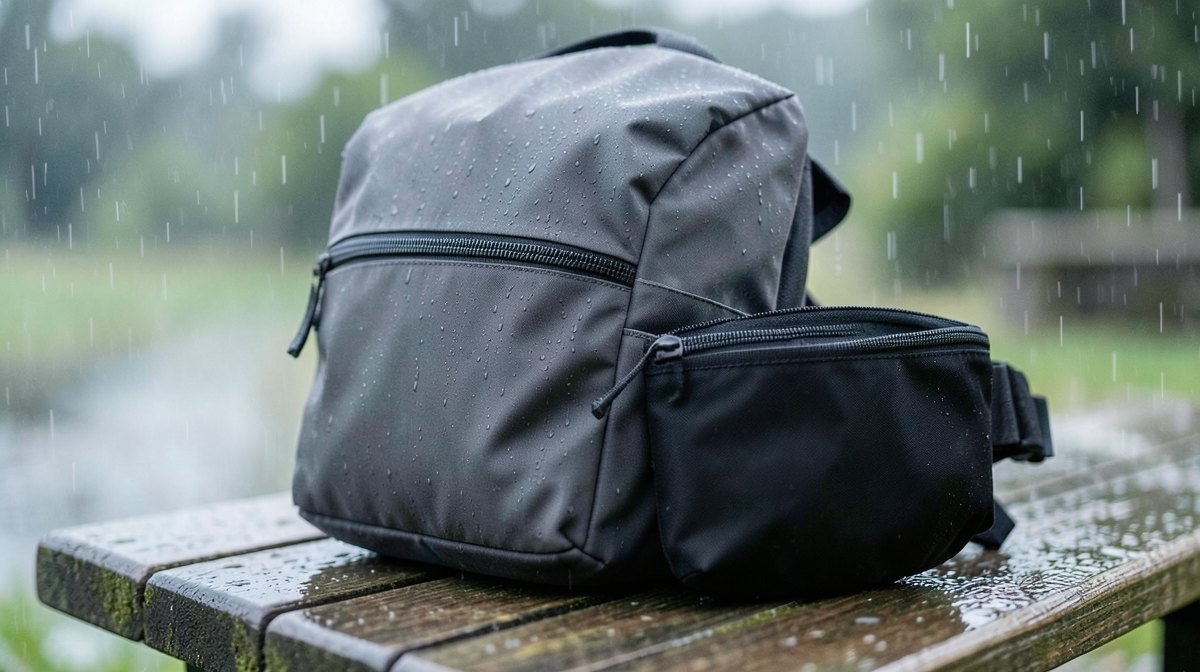
Water resistant vs waterproof comes down to how much water a bag lets in: a water resistant bag keeps your things dry in rain, while a waterproof bag keeps them dry under jets of water or, depending on its rating, even when it goes under. For bags, the gap between the two has less to do with the fabric than with the seams, the zippers and the opening. This guide shows you how to read a product listing and what a bag is really worth on a rainy day, using the models in our waterproof backpack range, starting at 13,95 €.
In this guide
- Water repellent, water resistant, waterproof: three levels
- IPX ratings, the only standard scale
- Hydrostatic head: what the fabric number means
- Where water actually gets into a bag
- Which level you need, use by use
- What our own listings really say
- Keeping the protection working
- Frequently asked questions
Water repellent, water resistant, waterproof: three levels
Three words describe three levels of protection, from the lightest to the most complete, and brands do not always use them with the same care.
A water repellent fabric has a surface treatment, usually called DWR (durable water repellent). Water beads up and rolls off instead of soaking into the weave. A short shower will not get through, steady rain eventually will, and the treatment wears off with washing and rubbing, starting where the straps touch your jacket.
A water resistant fabric stops water from passing through the material itself, thanks to a coating (polyurethane, TPU or PVC) or a very tight weave such as coated Oxford fabric. The material stops the rain; the bag as a whole is still open to water through its stitching, its zippers and its opening. Most bags sold for commuting sit at this level, whatever their name says.
A waterproof bag deals with those weak points as well: welded or heat-taped seams, a roll-top closure or a sealed zipper, and coated material over the whole surface. The word alone is not enough. The useful question is waterproof against what: splashes, jets of water, or full submersion. Leather follows its own rules, which we cover in is leather waterproof.
| Level | What stops the water | What the bag can take | Weak point |
|---|---|---|---|
| Water repellent | surface treatment (DWR) | drizzle, a short shower | treatment wears off, steady rain |
| Water resistant | coated material or tight weave | real rain, a commute in a downpour | seams, zippers, opening |
| Waterproof | material, seams and closure treated together | water jets, submersion depending on rating | weight, slower access to your things |
IPX ratings, the only standard scale
The IP code, defined by the international standard IEC 60529, is the only numbered scale shared by every manufacturer. The digit after the X rates protection against water. Bag makers rarely publish it, and that tells you something already: a bag sold as waterproof with no rating does not say what it actually withstands.
| Rating | Protection against water | What it means for a bag |
|---|---|---|
| IPX4 | splashing water from any direction | rain, road spray on a bike |
| IPX5 | water jets | driving rain, a garden hose |
| IPX6 | powerful water jets | waves, the deck of a boat |
| IPX7 | temporary immersion up to 1 m (about 3 ft) | a drop into a river, kayaking |
| IPX8 | continuous immersion beyond 1 m, as set by the maker | water sports |
An IPX4 bag is therefore water resistant in everyday terms: it protects a laptop in the rain, not from a fall into a lake. IPX4 is the rating stated for our anti-theft backpack in TPU, which also comes with a rain cover. Only IPX7 and IPX8 answer the question of going under.
Hydrostatic head: what the fabric number means
Outdoor brands rate fabrics with a second number, the hydrostatic head, given in millimeters. A column of water is placed on the fabric, and the height it reaches before water seeps through is the rating: the higher the number, the more pressure the fabric takes before leaking. Pressure matters because a backpack strap pressing on a wet shoulder, or a bag sitting in a puddle, pushes water into the weave far harder than falling rain does.
Keep two limits in mind. The number describes the fabric alone, never the seams or zippers, so a high rating on a stitched bag still leaks at the stitching. And for bags it is almost never published: when it is, it is a sign that the maker tested the material rather than just naming it. The PU coating that covers many bag fabrics is what gives them most of their resistance.
Where water actually gets into a bag
On a city bag, water rarely gets through the fabric first. It takes three other routes, and those are what to check before the label.
- Seams: every needle hole is a hole. Without welded or taped seams, steady rain ends up getting through there, whatever the fabric.
- Zippers: a standard zipper lets water seep between its teeth. A storm flap over it, or a coated zipper, makes the real difference.
- The opening and the back: a short flap, a headphone port or a mesh back panel let in the water running down the bag.
- The base: a bag set down on a wet sidewalk or a train floor takes water from below, and pressure does the rest. A coated or padded base keeps that water out far longer than a single layer of fabric.
The listing for our nylon belt bag says it plainly: the treated nylon sheds a shower, but long driving rain can get in at the seams. A good rule for any bag: keep your phone and papers in an inside pocket, away from the main zipper.
Which level you need, use by use
The level you need depends on what you carry and for how long it stays out in the rain, not on the strongest word on the tag. Paying for full waterproofing on an office commute adds weight and makes it slower to get to your things.
| Use | Level that is enough | Where to look |
|---|---|---|
| City commute, on foot or by train | water resistant, covered zippers | coated Oxford shoulder bag or backpack |
| Daily bike ride, long rain | water resistant with a rain cover, or IPX4 | TPU or PVC backpack |
| Laptop carried every day | water resistant, padded sleeve | waterproof laptop backpack |
| Running, hiking, sports | light water resistant | waterproof belt bag |
| Kayak, boat, beach | waterproof IPX7 or IPX8, roll-top closure | a dedicated dry bag, outside our range |
If a laptop is the most valuable thing you carry, look at where its sleeve sits. A padded sleeve against the back panel stays away from the front zippers, where water gets in first, and the back of the bag is the part your body shields from the rain. A sleeve that opens through the main zipper shares its weak point.
For most men who carry a bag every day, a water resistant model with protected zippers is all the protection needed. A fully waterproof dry bag only earns its weight when the bag may end up in the water.
What our own listings really say
On October 21, 2026 we went through all 122 backpacks published in our waterproof backpack range. 78 carry the word “waterproof” or its French equivalent in their supplier title, 44 the word for water resistant. Only 14 state a coated material, TPU or PVC, in their description or specifications; 10 come with a rain cover; a single one states a protection rating (IPX4), a single one mentions heat-taped seams, and none publishes a hydrostatic head. In other words, “waterproof” on a bag title usually means water resistant: real protection shows in the material, the seams and the rating, not in the name.
The same check works on any bag listing, ours included. Look for four facts: the main material and whether it is coated, how the seams are finished, what covers the zippers, and a written rating. A listing that names none of them is describing a water resistant bag at best, whatever its title says, and that is fine for a commute as long as you know it.
The models below are listed by the level of protection their listing describes, not by preference. Prices are those shown on each product page when you visit.
- See the anti-theft backpack with heat-taped seams: 1680D Oxford or TPU, heat-taped seams and a rain cover, the most complete protection in the range.
- See the IPX4 anti-theft backpack in TPU: the only model in the range that publishes a rating, with a rain cover.
- See the PVC laptop backpack: PVC coated material, 36 to 55 liters, for an 18 inch laptop.
- See the water resistant Oxford sport shoulder bag: 0.21 kg (7.4 oz), water resistant Oxford fabric, for a shower on a short trip.
- See the water resistant nylon chest bag: worn on the front, for outdoor days.
Keeping the protection working
Coatings and water repellent treatments age. Machine washing, detergents and strap friction attack them first. Wash the bag by hand in lukewarm water with mild soap, as we explain in how to clean a backpack, then let it dry open, away from a heater. When water stops beading on the surface, a DWR spray for technical fabrics restores it for a season, on a clean and dry bag. A coating that peels or turns sticky cannot be restored: at that point a rain cover is the honest fix.
In short: water resistant for the city, waterproof for the water
A water resistant bag with covered zippers handles everyday rain; a waterproof bag is only worth it if the bag may end up in the water, and then an IPX7 or IPX8 rating should be in writing. Before you buy, check the material, the seams, the zippers and the rating, in that order. Models built for everyday rain are in our waterproof backpack range, and our page on Oxford fabric completes this guide.
Frequently asked questions
Can a water resistant bag go under water?
A water resistant bag is not made to be submerged: its material stops rain, but water under pressure gets in through the seams and zippers. For submersion you need a waterproof bag rated IPX7 or IPX8.
What does IPX4 mean on a backpack?
An IPX4 rating means the backpack withstands splashing water from any direction, such as rain or road spray. It promises nothing if the bag is submerged.
Is Oxford fabric waterproof?
Oxford fabric is not waterproof by nature: it is a tight weave that becomes water resistant once it is coated. A coated Oxford bag holds up in rain, but its seams remain a way in.
How can I tell if a bag is truly waterproof?
A truly waterproof bag combines three things you can check on its listing: a coated material such as TPU or PVC, welded or taped seams, and a sealed or roll-top closure. A written IPX7 or IPX8 rating confirms it.
Does a rain cover make a backpack waterproof?
A rain cover protects a backpack very well in long rain, because it covers the seams and zippers. It does not make the backpack waterproof against submersion.
