
Guides & Advice
Types of Wallets: Nine Formats and the Pocket Each One Suits
Sep
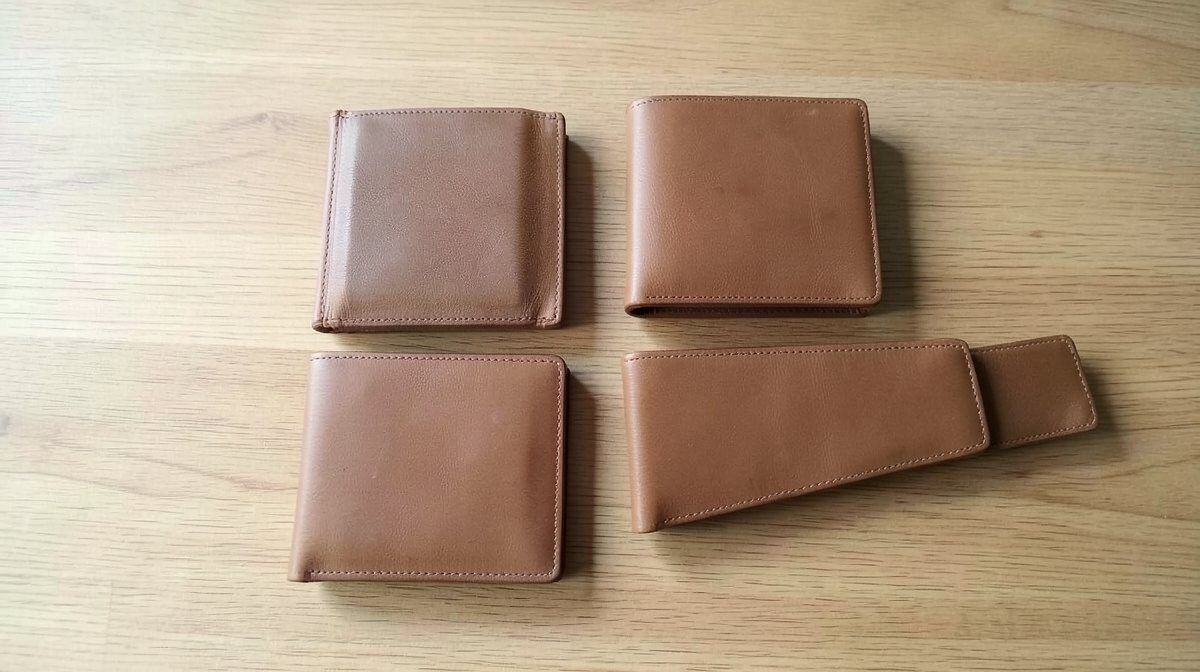
There are nine types of wallets worth knowing, and they differ less in style than in three practical things: how many cards they hold, whether cash lies flat or folded, and which pocket they are built for. A bifold and a card holder can look alike on a shop page and behave completely differently once they sit in a front trouser pocket for a week. This guide walks through each format in the order most men meet them, says who each one suits and who it will frustrate, and ends with a short method for choosing. We sort and describe wallets every week for our own men’s leather wallet range, so the catalogue figures below are counted on real listings, not estimated.
- The nine types of wallets at a glance
- Folding wallets: bifold and trifold
- Slim formats: card holder, front pocket and money clip
- Large formats: long, zip around and vertical
- Pop up card cases and coin wallets
- What our own range says about demand
- How to choose in three questions
- Where to look next
- In short
The nine types of wallets at a glance
Most confusion about wallet types comes from names. Shops use “slim”, “minimalist”, “card wallet” and “card holder” for overlapping things, and the same bifold can be sold as “classic”, “billfold” or “gentleman’s wallet”. The table sorts the formats by what they actually do rather than by what they are called. For exact measurements format by format, our guide to wallet sizes goes into the numbers; here the point is behaviour.
| Type | How it closes | Cash | Cards | Best pocket |
|---|---|---|---|---|
| Bifold | Folds once | Flat, full length notes | Medium | Back or jacket |
| Trifold | Folds twice | Flat | Medium to high | Jacket or bag |
| Card holder | Open slots, no fold | Folded, a few notes | Low | Front |
| Front pocket wallet | Small fold or none | Folded | Low to medium | Front |
| Money clip wallet | Folds once, clip outside or inside | Clipped, folded | Low | Front |
| Long wallet | Folds once, tall body | Flat, unfolded | High | Inside jacket or bag |
| Zip around wallet | Zip on three sides | Flat, enclosed | High | Bag |
| Pop up card case | Lever pushes cards out | Band or clip only | Low, fixed | Front |
| Coin wallet | Bifold with coin pouch | Flat, plus coins | Medium | Back or bag |
Two columns decide almost everything: cash and pocket. If you carry notes daily, anything that folds them in half will annoy you. If you want the wallet in a front pocket, anything that does not fold down to card size will too.
Folding wallets: bifold and trifold
The bifold is the default men’s wallet for a reason. It folds once along the middle, keeps notes flat in a full length compartment, and usually carries card slots on both inner panels. Thickness is its only real weakness, and it is a weakness of use rather than design: a bifold stays slim with six cards and becomes a brick with fifteen plus receipts. Sitting on a thick bifold in a back pocket is also the most common reason men switch formats, so if you already feel yours when you sit, the format is overloaded, not the wrong size.
The trifold adds a third panel and folds twice. That extra panel buys more card slots, often an ID window, and a smaller footprint once closed. The cost is depth: two folds stack three layers of leather plus whatever sits in each. Trifolds suit men who carry many cards and keep the wallet in a jacket or a bag rather than a trouser pocket. We compare the two head to head, fold by fold, in our bifold vs trifold wallet guide.
- Pick a bifold if you carry notes daily and around eight cards or fewer.
- Pick a trifold if you carry many cards, want an ID window, and rarely use a back pocket.
- Avoid either if the wallet must live in a front pocket of slim trousers.
Slim formats: card holder, front pocket and money clip
These three exist because payment moved to cards and phones, and many men now carry four or five cards and almost no cash. They trade capacity for thinness and are built for the front pocket, which is also the harder pocket to pick.
The card holder is a flat sleeve with two to six slots and often a central pocket for folded notes. There is no fold, so it is the thinnest leather option, and it slips into a shirt pocket or a small bag. Its limit is capacity: overfill the slots and the leather stretches and never tightens again.
The front pocket wallet is a slightly larger slim wallet, sometimes with one fold, shaped to sit vertically in a front trouser pocket. It usually carries a few more cards than a card holder and folded cash.
The money clip wallet pairs a small bifold or card sleeve with a spring clip for notes. Cash stays folded but reachable in one motion, and the whole thing stays thin. It is the format for men who still pay cash for small things but refuse a bulky wallet. Many slim wallets now include RFID blocking, which matters less than the marketing suggests but costs nothing in thickness.
Large formats: long, zip around and vertical
The long wallet, also called a breast pocket or continental wallet, is tall enough to hold notes without folding them at all. It carries the most cards of any format, often a zipped coin section, and it is the classic companion to a suit because it fits the inside pocket of a jacket. In a trouser pocket it simply does not work. For men who carry it in hand or in a bag, a men’s clutch bag is the next size up and does the same job with a phone added.
The zip around wallet closes with a zip on three sides. Nothing falls out, coins included, which makes it the travel and bag wallet of choice. It is thicker than an open bifold of the same capacity because the zip track and gusset add material.
The vertical wallet is a bifold turned upright: it opens like a book held portrait rather than landscape. The narrower shape suits front pockets and some jacket pockets better than a wide bifold, and cards stack in a column you read from the top. It is a niche format but a useful one if your trouser pockets are deep and narrow.
Pop up card cases and coin wallets
The pop up card case, sometimes sold as an ejector or aluminium card wallet, is a rigid box, usually metal, with a lever that fans the cards out. It protects cards from bending and is quick to use. The downsides are fixed capacity, since the box holds what it holds and no more, a hard edge in the pocket, and no proper place for notes beyond an outer band or clip. Leather wrapped versions soften the feel without changing the mechanism.
The coin wallet is a bifold with a dedicated coin pouch, either a snap pouch or a zipped section. It suits countries and habits where coins still circulate, and it is the format older buyers ask for most. Coins are the heaviest thing a wallet carries, so the pouch stitching is where cheaper wallets fail first. Whatever the type, the leather decides how long it lasts, which is why we explain full grain leather separately: a full grain bifold outlives two corrected grain ones.
What our own range says about demand
We counted the formats named in the product titles of the 66 wallets currently published in our catalogue. Titles understate the truth, because many listings do not name their format at all, but the proportions are telling.
- Bifold: 8 listings name it outright.
- Card holder: 8 listings.
- Zip wallet: 7 listings, most of them the zip around or zipped coin kind.
- Coin pocket: 7 listings mention a coin section.
- Pop up or ejector card case: 5 listings.
- Trifold: 4 listings, and vertical: 4.
- Money clip: 3 listings, long wallet: 2, front pocket: 1.
Two further figures from the same count: 18 of the 66 titles name RFID or contactless blocking, and 16 name PU leather, faux leather, microfibre or technical nylon. Neither is a flaw. PU leather keeps a wallet light and stable in shape, and a good one wears better than a poor cowhide. Our read is simple: the bifold and the card holder are the two core formats of a men’s range, and everything else is a specialist answer to a specific pocket or habit.
How to choose in three questions
Forget the names and answer these in order. The first answer usually settles it.
- Which pocket? Front trouser pocket: card holder, front pocket wallet, money clip or pop up case. Back pocket: bifold or coin wallet. Jacket or bag: trifold, long or zip around.
- How much cash, how often? Daily notes: bifold, trifold or long wallet, so they stay flat. Occasional notes: money clip or card holder with a central pocket. Coins: coin wallet or zip around.
- How many cards? Five or fewer: any slim format. Six to ten: bifold. More than ten: trifold or long wallet, and an honest look at which cards you really use.
Leather choice comes after format, not before. A crazy horse leather wallet darkens and softens with use; a smooth cowhide stays crisp; PU keeps its shape and colour. Whichever you pick, a light conditioning twice a year, as in our leather conditioning guide, keeps the fold lines from cracking.
Where to look next
- See the men’s leather wallets, bifolds, card holders, zip and coin formats in one place.
- See the full grain leather belts if you like your wallet and belt in the same leather.
- See the clutch bags when a long wallet is no longer enough and the phone needs a place too.
- See the phone bags for the men who have replaced the wallet with a phone and a single card.
In short
Choose the pocket first, then the cash habit, then the card count, and the right type of wallet names itself. Bifolds and card holders cover most men; trifolds, long and zip around wallets serve jackets and bags; money clips and pop up cases serve the front pocket minimalist. Read the wallet sizes guide before ordering, then browse the men’s leather wallets with your three answers in hand.
Frequently asked questions
What is the most common type of men’s wallet?
The bifold. It folds once, keeps notes flat and carries enough cards for most people. In our own catalogue it ties with the card holder as the format most often named in product titles.
What is the difference between a card holder and a wallet?
A card holder is a flat sleeve with a few slots and no fold, built for cards first and cash second. A wallet folds, holds notes flat and carries more cards. The card holder wins on thinness, the wallet on capacity.
Which type of wallet is best for a front pocket?
A card holder, a front pocket wallet, a money clip wallet or a pop up card case. All four stay close to card size and thin enough not to show through trousers. A bifold only works in a front pocket if you carry very few cards.
Is a money clip better than a wallet?
Only if you carry little cash and few cards. A money clip is thinner and faster, but it leaves notes folded and exposed. Men who pay cash daily usually go back to a bifold within months.
Are trifold wallets out of style?
They are less common than they were, mainly because men carry fewer cards and less cash. For someone who does carry a lot, a trifold kept in a jacket is still the most compact way to hold it all.
How long should a leather wallet last?
A full grain leather wallet used daily lasts many years, and the stitching and fold usually wear before the leather does. Keeping it below its intended capacity is the single thing that extends its life most.
