
Guides & Advice
Shagreen Leather: Stingray Skin, Finishes and How to Spot It
Oct
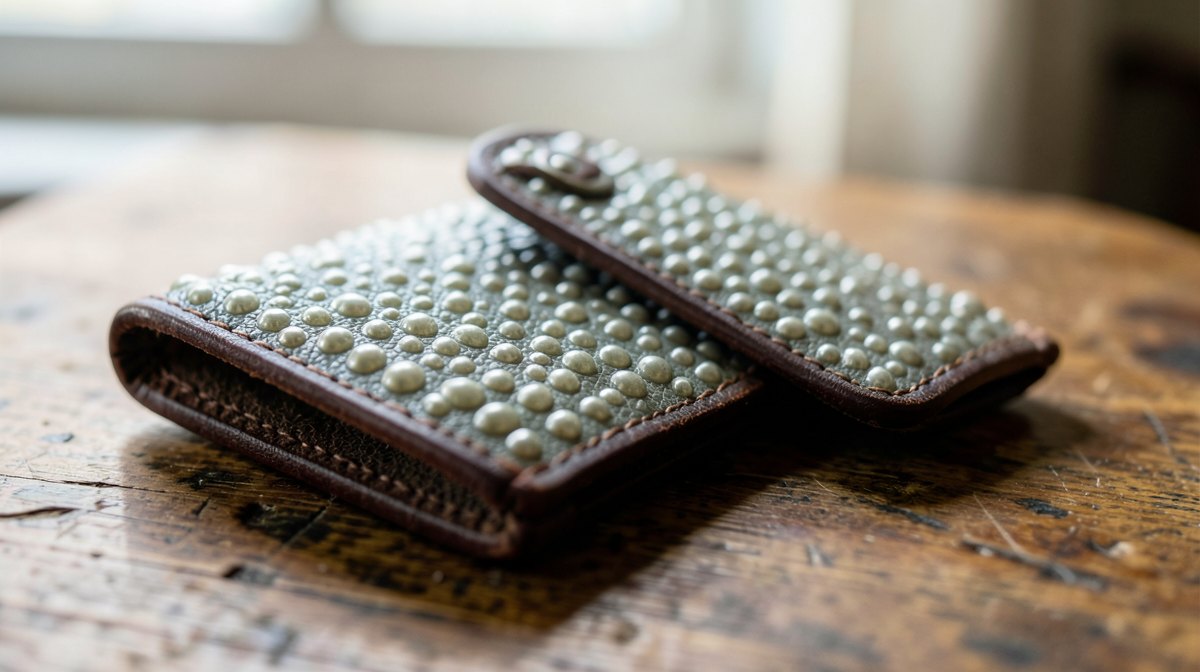
Shagreen leather is tanned stingray skin, covered in tiny calcified beads that give it a gritty feel and an almost mineral sheen. You find it on wallets, cases, watch straps, Japanese sword grips and Art Deco furniture. It is one of the toughest leathers there is, and one of the easiest to fake. If you want an everyday piece in real animal leather right now, browse our real leather wallets for men. Here is what shagreen really is, where the name comes from, its two finishes and how to spot the real thing.
What is shagreen leather?
Shagreen is the tanned skin of a stingray, and in the past also of some sharks and dogfish. Instead of scales, the hide carries thousands of small, hard, calcified beads packed tightly together. In the middle of the back, a cluster of larger, whiter beads forms a patch that craftsmen call the eye, the star or the crown. It is the most prized part of a skin, and the easiest to spot on a genuine piece.
A stingray skin is small: it rarely yields more than a wallet flap or the lid of a case. That is why shagreen is mostly used for small leather goods and inlay, rarely for a whole bag. Today most skins come from Thailand, where the ray is fished for its meat and the skin is used as a by-product. To place shagreen among other hides, our guide to the types of leather compares cowhide, calfskin, lambskin and exotic leathers.
Where the names shagreen and galuchat come from
The English word shagreen first meant a grained horse leather from Persia and Turkey, and later came to mean ray and shark skin. The French call it galuchat, after Jean-Claude Galluchat, a Parisian master case maker under Louis XV, who covered cases, boxes and scabbards with it.
Japan used it long before: ray skin, called samé, wraps the grip of the sword under the binding, because its beads stop the hand from slipping. In the 1920s, Art Deco designers such as André Groult covered whole pieces of furniture with it, sanded and dyed pale green or ivory. Shagreen shares with ostrich leather the status of a rare exotic hide recognised by its natural relief.
Pearled or sanded shagreen: two finishes
The same stingray skin gives two very different looks, depending on whether its beads are kept whole or sanded down.
| Feature | Pearled shagreen | Sanded shagreen |
|---|---|---|
| Surface | whole beads, domed and glossy | beads ground flat, smooth surface |
| Feel | rough, like very fine sandpaper | soft, slightly cellular |
| Look | strong relief, eye clearly visible | pattern of light cells within the colour |
| Common use | grips, trims, straps | cases, wallets, furniture |
On sanded shagreen, the dye seeps between the beads but not into them: each bead stays light inside a coloured network, which creates the small cell pattern typical of Art Deco furniture. To compare with more common surface grains, our article on pebbled leather explains the difference between a natural and a printed grain.
How to spot real shagreen
The pearled pattern is easy to copy: embossing presses it into cowhide or vinyl, and some furniture makers even sell a synthetic shagreen under that name. Four clues tell them apart.
- Hardness: a real bead feels hard and cold under a fingernail, like a glass marble. An embossed bead gives slightly and stays at hand temperature.
- The eye: a genuine skin has a central cluster of larger, whiter beads. A copy repeats the same pattern across the whole surface, with no centre.
- Irregularity: on real shagreen, beads get smaller from the centre to the edges. Embossing lines up identical beads at even spacing.
- Piece size: a stingray skin is small. A large bag covered in one seamless piece of shagreen should raise doubts.
The same habits apply to any leather: our guide on full grain vs top grain leather covers how to read the edge, the smell and the feel.
Caring for shagreen
Shagreen beads absorb neither water nor cream: wipe them with a soft, barely damp cloth, then dry. There is no point feeding the beaded surface, as product would sit between the beads and dull the whole piece. The leather on the edges, stitching and lining is treated like any smooth leather, with a colourless cream now and then. Keep it away from direct heat and solvents, which can fade the dye on sanded shagreen. Our guide on how to condition leather covers the basics for the classic leather parts.
Our pieces with a strong leather grain
We do not sell shagreen. For animal leather with a bold texture or character, here are our closest selections:
- See our real leather wallets for men, the small leather goods where shagreen is most common.
- See our leather sling bags, including a croco embossed model and distressed leathers.
- See our men’s leather bags, for the most refined finishes.
- See our full grain leather belts, another classic use of exotic hides.
Four products from these selections show what a leather with character looks like: the croco embossed leather chest bag, the horse leather sling bag, the distressed cowhide sling bag and the vintage leather messenger bag.
In short: shagreen at a glance
Shagreen leather is stingray skin covered in hard beads, recognised by its central eye and beads of uneven size. Pearled, it grips the hand; sanded, it shows a pattern of light cells. It is remarkably durable, but small skins limit it to pocket items. For everyday animal leather, our real leather wallets for men and our guide to the types of leather will help you choose.
Frequently asked questions
Is shagreen a fish leather?
Broadly, yes: rays and sharks are cartilaginous fish. Shagreen still differs from soft fish leathers such as salmon, because its calcified beads make it stiff and gritty.
Is shagreen leather durable?
It is one of the most wear resistant leathers, as the beads shield the skin from rubbing and moisture. It does not fold well, though, so it suits flat, rigid items rather than soft bags.
Why is shagreen expensive?
A stingray skin is small, and only its central part carries the prized eye. The work is delicate: the beads blunt blades, and sanding takes time. The price reflects the scarcity of usable surface as much as the labour.
Is faux shagreen real leather?
No. Faux shagreen is embossed cowhide or a vinyl printed with the bead pattern. It can look good, but it has neither the hardness nor the central eye of real stingray skin: always check the stated material.
