
Guides & Advice
How Is Leather Made? The Tanning Process From Hide to Bag
Oct
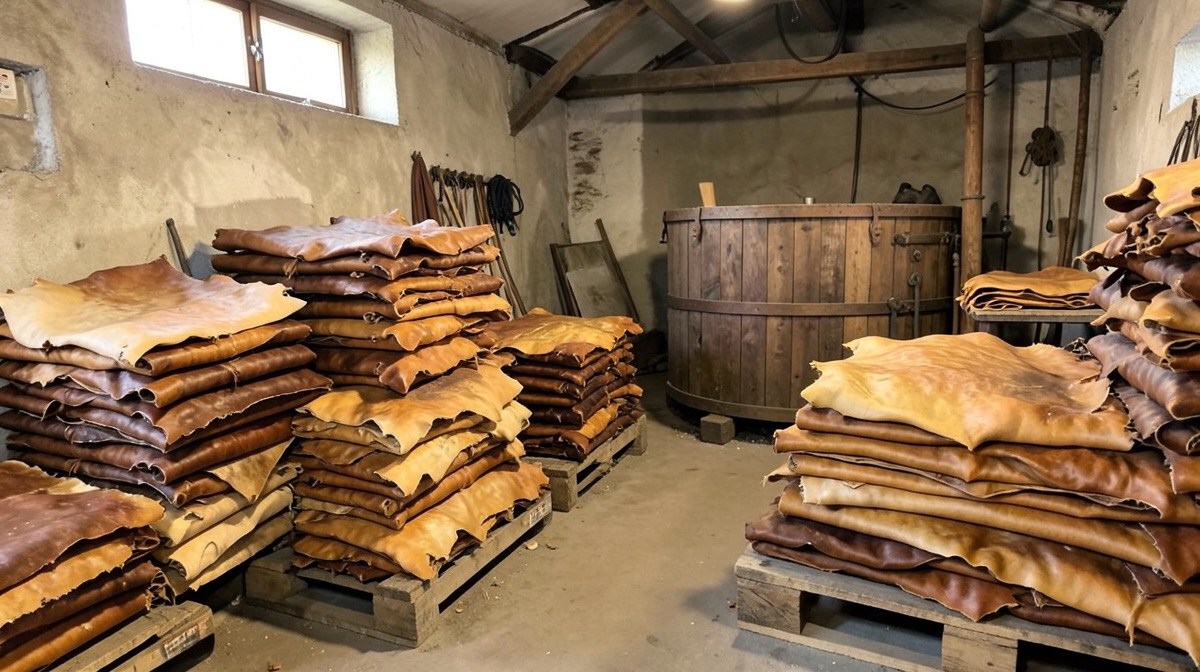
How is leather made? A raw animal hide is cleaned, stripped of hair and flesh, split to thickness, tanned so it stops rotting, then dyed, oiled, dried and finished. Tanning is the step everyone has heard of, and it comes in two main forms: chrome tanning, which takes hours, and vegetable tanning, which takes weeks. But it sits in the middle of a longer chain, and every link in that chain changes how a bag feels, ages and costs. This guide walks through the process in order, then shows what it means when you shop for a leather shoulder bag for men.
In this guide
- Step 1: preparing the hide
- Step 2: tanning, chrome or vegetable
- Step 3: crusting and finishing
- What tanning changes in a bag
- What our product pages say
- Frequently asked questions
Step 1: preparing the hide
Leather starts as a by-product of the meat industry. Hides reach the tannery salted or dried so they do not decay in transit, and the first job is to turn them back into clean, workable skin. Tanners call this stage the beamhouse:
- Soaking: the hide is washed and rehydrated, which also removes the salt used to preserve it.
- Liming and unhairing: an alkaline bath opens up the fiber structure and loosens the hair, which is then removed.
- Fleshing: a machine scrapes away the fat and tissue left on the flesh side.
- Splitting: the thick hide is sliced horizontally into layers. The top layer keeps the grain, the tight outer surface; the lower layer, the split, is more fibrous.
- Deliming, bating and pickling: the liming chemicals are washed out, enzymes soften the fibers, and an acid bath prepares the hide to take up the tanning agent.
Splitting is where quality is decided. The grain layer, left uncorrected, becomes full grain leather, the strongest and most characterful cut. Sand it lightly and you get top grain. The split underneath is what suede is made from, or it receives an applied surface. Our comparison of full grain vs top grain leather goes deeper into those grades.
A good hide is also a question of the animal’s life before the tannery. Scars, insect bites and barbed wire marks show up on the grain, and a damaged hide yields far less usable leather, which is why tanneries sort hides by grade before they go any further.
Step 2: tanning, chrome or vegetable
A hide that is simply dried turns hard and brittle, and it starts to rot again the moment it gets wet. Tanning locks agents onto the hide’s proteins so it stays flexible and stable for decades. The two dominant methods have little in common:
| Chrome tanning | Vegetable tanning | |
|---|---|---|
| Agent | chromium III salts | tannins from bark and wood, such as mimosa and chestnut |
| Time in the bath | a few hours, up to about a day | several weeks |
| Share of world production | roughly 85 percent | a small minority |
| Hand feel | soft, supple, drapes well | firm, full bodied |
| Colors | any color | mostly natural, brown, cognac, black |
| Aging | changes little | darkens and develops a patina |
Fresh out of the chrome drum, the hide turns a pale blue, and the industry calls it “wet blue”. The chromium used is chromium III, not the toxic chromium VI, and tanneries in Europe and the United States must treat their wastewater. Vegetable tanning is the older craft: hides move through a series of tannin baths of increasing strength, which is why it takes so long and costs more. A third route, combination tanning, uses both to get leather that is soft yet full. We cover the slow method in detail in our guide to vegetable tanned leather.
Step 3: crusting and finishing
Tanned leather is not finished leather yet. A second series of operations, called crusting, gives it its final thickness, color and softness:
- Sammying and shaving: water is squeezed out, then the leather is shaved to an even thickness.
- Neutralizing: the pH is brought to between 4.5 and 6.5.
- Retanning: a second tannage fine-tunes the feel and the structure.
- Dyeing: the leather is colored through, tumbling in a drum.
- Fatliquoring: oils and fats are worked into the fibers so they stay supple.
- Drying: vacuum dried, air dried or oven dried, down to a moisture level of roughly 14 to 25 percent, then mechanically softened.
Finishing sets the surface: buffing, a protective coat, an embossed grain pattern, a polish or a matte look. This is where most trade names come from. Crazy horse leather, for instance, is heavily oiled and waxed leather that lightens wherever it bends or gets scratched, as explained in our article what is crazy horse leather.
The finish is also what you maintain at home. A coated finish wipes clean and resists stains; an open, oiled finish soaks up conditioner and darkens with it. Knowing which one you have tells you how gentle your cleaning needs to be.
What tanning changes in a bag
For anyone buying a messenger bag or a briefcase, all of this boils down to four practical differences:
- Structure: vegetable tanned leather holds its shape and stands up on its own; chrome tanned leather slouches more.
- Patina: vegetable tanned leather darkens in daylight and polishes with handling; chrome tanned leather stays close to its original color.
- Water: vegetable tanned leather marks faster in the rain and needs more care.
- Price: weeks in the pit cost more than hours in the drum.
The same chain also explains the labels you read on a product page. “Full grain” tells you which layer of the hide was used and that the surface was left intact. “Top grain” means the grain layer was lightly sanded and usually coated. “Split” or “suede” points to the lower layer of the hide. “Bonded leather” is something else again: leather fibers and scraps bound together with a binder onto a backing, as our article what is bonded leather explains. None of these words says anything about the tanning method, which is why a seller who names it, chrome or vegetable, is giving you a piece of information most listings leave out.
My take: neither one is better across the board. For a daily bag that gets caught in the rain, a well finished chrome tanned leather is the easier companion. For a bag you want to see age with you, vegetable tanning has no substitute. Either way, leather needs feeding now and then, and our guide on how to condition leather covers how often and with what.
What our product pages say
We went through our catalog on October 1, 2026: out of 1,356 live product pages, 408 have the word leather (cuir) in their title. 52 specify full grain leather, 68 cowhide and 19 crazy horse leather. On the other hand, none claims vegetable tanning, and only 2 mention chrome: most of our suppliers do not publish their tanning method, and we would rather say so than make it up.
- See the crazy horse leather messenger bag with patch pockets: oiled and waxed leather that marks and ages.
- See the vertical cowhide crossbody bag: soft cowhide in an upright format.
- See the compact crazy horse leather bag: top handle and shoulder strap for everyday carry.
- See all men’s leather bags: the full collection.
Conclusion: the rule to remember
Leather is made in three stages: prepare the hide, tan it, then crust and finish it. Chrome tanning gives soft, colorful leather in hours; vegetable tanning gives firm leather that develops a patina after weeks in the bath. To choose between them, compare the main types of leather, then browse our leather shoulder bags for men.
Frequently asked questions
Is chrome tanned leather toxic?
Tanning uses chromium III, not the chromium VI that is classed as toxic. The risk comes from poorly controlled tanning, which can let chromium VI form, and that is why the European Union caps its content in leather goods that touch the skin.
How long does it take to make leather?
The chrome tanning bath itself lasts from a few hours to about a day, while vegetable tanning takes several weeks of successive baths. From raw hide to finished leather, the whole process runs from a few days to several weeks.
How can you tell vegetable tanned leather?
Look at the cut edge: brown all the way through on vegetable tanned leather, often grayish blue on chrome tanned leather. Vegetable tanned leather also smells woody, feels firmer and darkens noticeably after a few weeks in the sun.
Is leather a by-product of the meat industry?
For cowhide, yes: tanneries buy hides from the meat industry, and those hides would otherwise be discarded. Exotic leathers are a different story, which is one reason to know what your bag is made of.
