
Guides & Advice
How to Reset a TSA Lock: New Code or Forgotten Combination
Oct
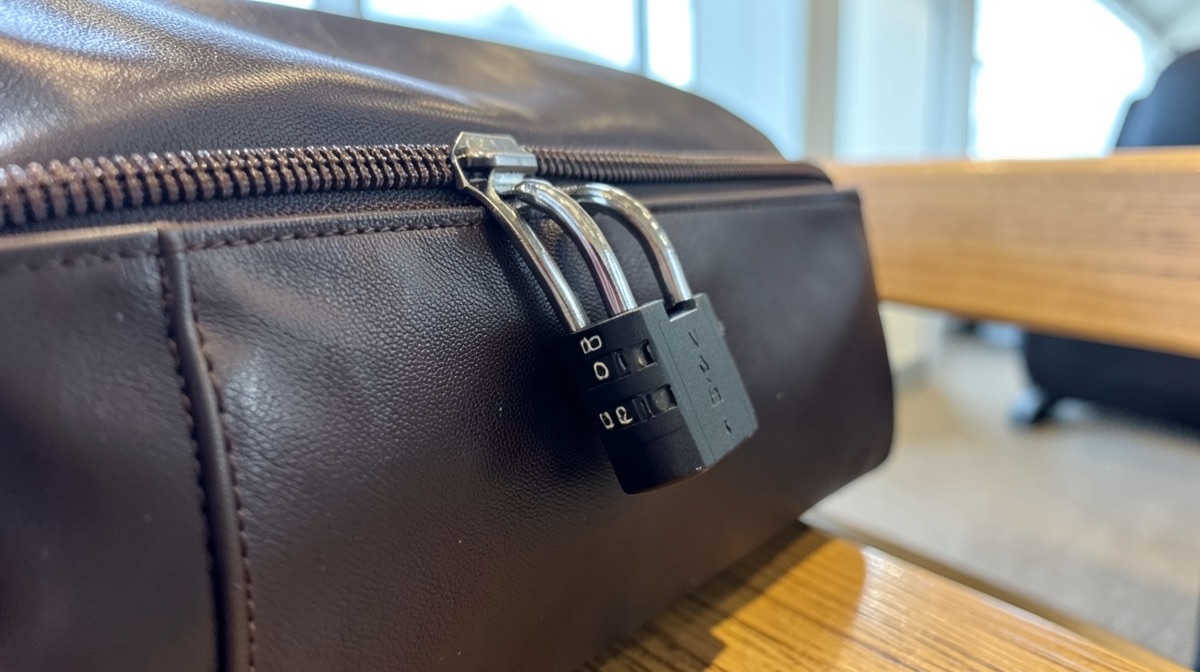
Here is how to reset a TSA lock: open it with the current combination (0-0-0 on most new locks), put it in setting mode with the small reset button or the shackle, dial your new code, then release. That is the whole job on nine locks out of ten, and the only real variable is where the reset mechanism hides. This guide covers what makes a lock “TSA accepted”, the exact steps for the three common designs, and what to do when you have forgotten the combination. The bags we sell with a built-in lock are mostly anti-theft models, grouped in our anti-theft backpack collection.
In this guide
- What is a TSA lock?
- How to reset a TSA lock, step by step
- Three reset mechanisms, three different moves
- Forgot the combination? Open it without cutting it
- Bags with a lock in our catalog
- Frequently asked questions
What is a TSA lock?
TSA stands for the Transportation Security Administration, the federal agency that screens passengers and bags at US airports. Checked bags can be opened for a hand search when you are not there. If the bag is closed with an ordinary padlock, the officer may have to cut it. A TSA lock adds a small keyhole that officers open with a universal key: the bag is inspected, locked again, and the lock survives.
You can tell a TSA accepted lock by one of two marks on the body:
- a red diamond, the Travel Sentry logo;
- a red and white torch, the Safe Skies logo.
Next to the keyhole you will often find a code such as TSA002 or TSA007, which tells the officer which key fits. No logo means a plain combination lock, and that one can be forced. So a TSA lock is less a theft barrier than a lock you can keep closed on a flight to or within the United States. On the road, it still stops the quick, opportunistic hand, which already matters on a men’s travel bag left on a luggage rack.
How to reset a TSA lock, step by step
These steps work for the large majority of three-dial TSA locks, whether the lock is a separate padlock or built into the bag. Only step 2 changes from one design to the next, and the next section shows how.
- Open the lock with the current code. A new lock is almost always set to 0-0-0. If the bag is secondhand, ask the seller for the code first.
- Enter setting mode. Depending on the model, press the tiny reset button with a ballpoint pen tip, or push the open shackle down and rotate it. You usually feel a faint click.
- Dial your new combination while keeping the button pressed if your model requires it.
- Release the button or bring the shackle back to its normal position. The new code is now stored.
- Test it before you travel. Scramble the dials, enter the code again and check that the lock opens. Do it twice, at home, with the bag empty.
My advice: save the combination somewhere other than the bag, in your phone notes for instance, and skip birthdays and 1-2-3. The bag we sell as the men’s crossbody bag with USB port and TSA lock resets exactly this way.
Three reset mechanisms, three different moves
Most failed resets come from the wrong move at step 2. Use this table to find what to look for on your lock.
| Lock type | Where the reset is | The move | The trap |
|---|---|---|---|
| Padlock with a shackle | on the shackle itself | with the shackle open, push it down and turn it, dial the code, turn it back | turning the shackle while locked does nothing |
| Lock built into the bag or suitcase | small button on the side or underneath | press with a pen tip, dial, release | letting go too early keeps the old code |
| Cable lock | button or lever next to the dials | with the cable out, move the lever, dial, flip it back | resetting with the cable engaged can jam the mechanism |
When in doubt, the maker’s instructions win: some models want the button held down for the whole reset, others only for a second. On our men’s anti-theft sling bags, the lock either sits in the flap or clips through the zipper pulls, and the reset is always done with the zipper open, never with the bag locked.
One more thing: a lock that holds the zipper pulls together puts strain on the slider if you yank on it. If the slider starts to spread over time, our guide on how to fix a zipper on a backpack shows how to squeeze it back with pliers.
Forgot the combination? Open it without cutting it
A lost code does not doom the lock or the bag. Work through these options in order, from easiest to most drastic:
- Try your usual codes: old lock combinations, numbers that mean something to you. Memory often comes back on the third or fourth try.
- Try every combination. Three dials of ten digits give 1,000 possibilities, from 000 to 999. Going in order without skipping, plan on about twenty minutes.
- Contact the lock or bag maker with the serial number at hand: some can walk you through it.
- At the airport, ask the security staff; anywhere else, a locksmith can open this kind of lock without damage.
- As a last resort, cut the shackle with bolt cutters and replace the lock.
Once it is open, set a fresh code right away using the steps above. If you fly a lot, a keyed TSA lock removes the problem entirely, as long as you keep track of the key. For an everyday bag, a hidden zipper against your back often does more than any lock, which is the idea behind our anti-theft backpacks.
Bags with a lock in our catalog
Out of 1,356 product pages live on October 1, 2026, 6 mention a TSA lock and 8 mention a padlock or combination lock. Nearly all of them are anti-theft sling and chest bags: the lock secures the main zipper, the one most exposed in a crowd. None of them is a suitcase, which matters for screening: a bag that stays with you in the cabin never needs to be opened while you are away.
- See the crossbody bag with TSA lock: built-in lock and USB port, made for commuting.
- See the TIGERNU TSA lock backpack: a combination lock replaces the key on the main compartment.
- See the anti-theft sling bag with combination lock: the most compact bag in the group.
- See the chest bag with combination lock and USB: lock built into the shell, reset with the button pressed.
Conclusion: the rule to remember
A TSA lock is always reset while open, starting from the current code, and tested twice before you leave. If you forget the code, 1,000 combinations take about twenty minutes to work through, so there is no reason to force a bag. To compare bags with a built-in lock or a hidden zipper, browse our anti-theft backpack collection, and to see what a lock cannot do for the cards in your pocket, read our guide on RFID blocking.
Frequently asked questions
Do I need a TSA lock to fly to the United States?
No rule requires a lock at all. A checked bag closed with a non-TSA lock can simply be opened by force if officers need to search it. Avoiding that damage is the one advantage a TSA lock has over a regular padlock.
How do I know my lock is really TSA accepted?
Look for the Travel Sentry red diamond or the Safe Skies torch on the body, plus the small keyhole next to the dials. Without both, the TSA does not recognize the lock, whatever the packaging says.
Can I reset a TSA lock without knowing the current code?
No. Every reset starts with the lock open on its current code, which is what stops a stranger from reprogramming it. If the code is lost, you first have to find the combination that opens it.
How long does it take to try every combination?
A three-dial lock has 1,000 combinations, and most people get through them in about twenty minutes. A four-dial lock has 10,000, so the maker or a locksmith will save you a lot of time.
Does a TSA lock stop theft?
It mainly deters quick grabs: a small luggage lock can be cut in seconds with pliers. For a bag you carry around town, a hidden zipper, cut-resistant fabric or a compartment against your back protects better than a lock.
