
Guides & Advice
What Is Oxford Fabric? Denier, Waterproofing and Bag Care
Oct
What is Oxford fabric? It is a fabric defined by its weave, a basket weave in which yarns are grouped in pairs or more and cross over and under each other like a tiny checkerboard. The same name covers two very different materials: a soft cotton used for Oxford shirts, and a tough synthetic canvas, usually polyester or nylon and often coated, used on most everyday bags and backpacks. That second kind is what you will find on many of our men’s canvas crossbody bags. This guide explains what Oxford means on a product page, what 600D or 1680D tells you, whether it is waterproof, and how it compares with nylon, Cordura and cotton canvas.
In this guide:
- Oxford fabric: definition and origin
- Cotton Oxford vs synthetic Oxford
- 600D, 900D, 1680D: what denier means
- Is Oxford fabric waterproof?
- Oxford vs polyester, nylon, Cordura and canvas
- How to clean an Oxford fabric bag
- Oxford bags to compare
- Frequently asked questions
Oxford Fabric: Definition and Origin
Oxford cloth takes its name from nineteenth-century Scottish mills that named their fabrics after universities: Oxford, Cambridge, Harvard and Yale. Only Oxford stuck. What defines it is not the fiber but the construction. In a basket weave, two or more weft yarns pass together over the same number of warp yarns, which gives a lightly textured surface that is softer and more breathable than a plain weave of the same weight.
Bag makers borrowed that weave and switched to thick synthetic yarns. The result is an even, lightweight canvas that resists abrasion and takes a coating well on its back side to stop water. That combination of low weight, durability and price is why Oxford became one of the most common materials on everyday men’s bags, from sling bags to laptop backpacks.
Cotton Oxford vs Synthetic Oxford
When a shirt is called Oxford, it is cotton: fine yarns, a soft hand and a slightly heathered look. When a bag is called Oxford, it is almost always polyester, sometimes nylon, woven much heavier and often backed with a coating. The two share the weave and nothing else.
- Cotton Oxford: shirts and clothing; breathable, wrinkles, absorbs water.
- Polyester Oxford: the bag standard; stable in sunlight, holds color well, absorbs very little water.
- Nylon Oxford: more abrasion resistant and more elastic than polyester at the same thickness, usually a bit more expensive.
So “Oxford” alone on a listing does not tell you the fiber. If it matters to you, look for polyester or nylon in the description. Many of the sportier textile shapes in our men’s gym bags are built this way.
600D, 900D, 1680D: What Denier Means
The number followed by a D is the denier: the weight in grams of 9,000 meters of a single yarn. A 600 denier yarn weighs 600 grams per 9,000 meters. The higher the number, the thicker the yarn, and the heavier and denser the fabric.
| Denier | Feel and weight | Typical use |
|---|---|---|
| 210D to 420D | thin, light, flexible | linings, packable bags, inside pockets |
| 600D | thick, holds its shape | the benchmark for everyday shoulder bags and backpacks |
| 900D | stiffer and heavier | sports bags, luggage that gets handled a lot |
| 1680D | very dense, technical look | tool bags, heavy-duty luggage, gear |
One shortcut to avoid: a higher denier does not guarantee a stronger fabric on its own. Tear strength also depends on the fiber (nylon outperforms polyester), on how tightly the fabric is woven and on the coating. A tightly woven 600D nylon can outlast a loose 900D polyester. Some listings give a weight in grams per square meter (GSM) instead: it measures the finished fabric, coating included, so it cannot be compared directly with a denier figure.
What we see in our own catalog: as of October 11, 2026, 192 product pages mention Oxford, and fewer than one in twenty states a denier (600D most often, then 300D, 900D, 1000D and 1680D once each). Denier is a useful clue when it is given, not a number you can compare every bag on. Military-inspired designs, like our tactical chest bags, are the ones most likely to list it.
Is Oxford Fabric Waterproof?
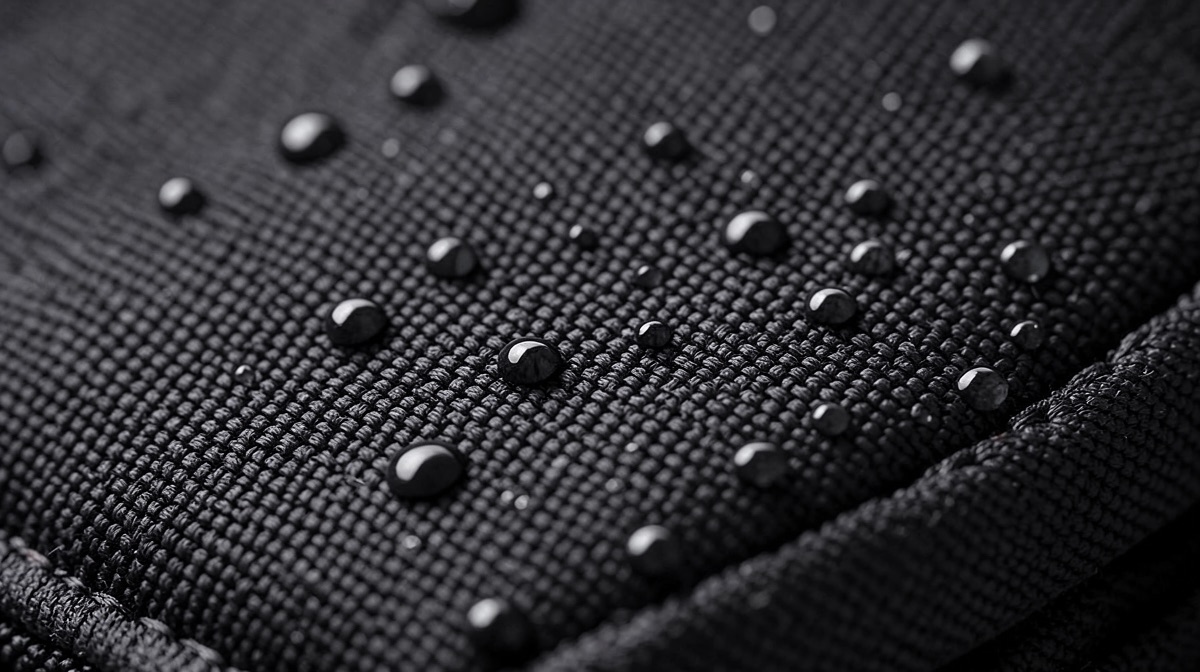
Not by itself. Any woven fabric lets water through the gaps between its yarns, whatever the fiber. What makes an Oxford bag rain resistant is the coating on the back, polyurethane (PU) or PVC, sometimes combined with a water-repellent finish on the face. Three terms show up on listings, and they do not mean the same thing:
- Water-repellent: water beads and rolls off the surface, but steady rain eventually soaks through.
- Water-resistant: the coated fabric stops water, while seams and zippers remain entry points.
- Waterproof: taped or welded seams and a sealed closure keep the contents dry even in a downpour.
Of our 192 Oxford listings, 57 use the French word for water-resistant and 41 the word for waterproof. If you carry a laptop or documents, check the zipper and the seams as carefully as the fabric, because that is where water gets in. Designs built for rain are grouped in our waterproof backpacks.
Oxford Fabric vs Polyester, Nylon, Cordura and Canvas
These materials share the same shelves and get confused all the time. The first confusion is easy to clear: Oxford is a weave and polyester is a fiber, so most Oxford bags are simply polyester woven in a basket pattern. The table places the rest side by side.
| Material | What it is | Strengths | Watch out for |
|---|---|---|---|
| Polyester Oxford | basket weave in polyester yarn, often coated | light, stable, colorfast, affordable | less abrasion resistant than nylon |
| Nylon | synthetic fiber in many weaves | excellent abrasion resistance, supple | can fade in prolonged sun |
| Cordura | a registered brand of technical fabrics, mostly high-tenacity nylon | among the most hard-wearing options | heavier and pricier |
| Ballistic nylon | thick nylon in a basket weave, often 1680D | very tear resistant | stiff, technical look |
| Cotton canvas | natural fiber, usually a plain weave | natural hand, ages with character | absorbs water unless waxed |
Our take: for a bag you carry every day in town, a coated 600D polyester Oxford does the job very well, with very little weight and almost no upkeep. Nylon or Cordura make sense for harder use, outdoors, on a motorbike or for tools. If you like materials that age with you, go for cotton canvas instead; our canvas bags for men cover that side.
How to Clean an Oxford Fabric Bag
Synthetic Oxford is one of the easiest fabrics to look after, as long as you protect its coating:
- brush off dust when dry with a soft brush;
- spot clean with a sponge, lukewarm water and mild soap, without scrubbing hard;
- skip the washing machine, the dryer and the iron, which wear out the backing;
- dry the bag flat and open, away from radiators;
- refresh the water repellency with a spray made for synthetic textiles once water stops beading.
A sports or everyday bag treated this way every two or three months keeps its look far longer. The bags that see the most action, like our men’s sling bags, benefit most.
Oxford Fabric Bags to Compare
A few places to start if you want a bag in Oxford or a similar technical textile:
- Men’s Oxford sport shoulder bag: light and versatile, from the golf course to the city.
- Men’s sling bags: compact textile shapes for daily carry.
- Tactical chest bags: dense fabrics, often with the denier listed.
- Waterproof backpacks: coated fabrics and closures designed for rain.
See all men’s canvas crossbody bags
In Short: Is Oxford Fabric a Good Choice for a Bag?
Oxford fabric is a weave, not a fiber: cotton for shirts, polyester or nylon for bags. On a bag, judge it by its fiber, its denier when listed, its coating and its seams, and do not confuse water-resistant with waterproof. For most daily carry, a coated 600D polyester Oxford is a sensible, low-maintenance choice. Browse our men’s canvas crossbody bags or compare the tougher options among our tactical chest bags.
Frequently Asked Questions
Is Oxford fabric durable?
Yes, it is one of the most widely used bag fabrics because it resists abrasion and stays light. Real-world strength depends on the fiber, the denier and how tightly it is woven: a dense nylon Oxford outlasts a loose polyester one.
What is 600D Oxford fabric?
It is Oxford fabric woven from 600 denier yarn, meaning 600 grams per 9,000 meters of yarn. It is the most common thickness on everyday shoulder bags and backpacks.
Is Oxford fabric the same as polyester?
Not quite. Oxford describes the weave and polyester the fiber, and most Oxford bags are polyester woven in a basket pattern. An Oxford bag can also be nylon or cotton.
Can you machine wash an Oxford fabric bag?
It is better not to. The drum and the heat wear down the coating that keeps water out. A sponge, lukewarm water and mild soap are enough, followed by drying flat.
Is Oxford fabric breathable?
Cotton Oxford breathes well, which is why it works for shirts. Coated synthetic Oxford used on bags breathes very little, which is exactly what keeps rain away from your belongings.
