
Guides & Advice
Bifold vs Trifold Wallet: Thickness, Cards and Pocket Fit
Sep
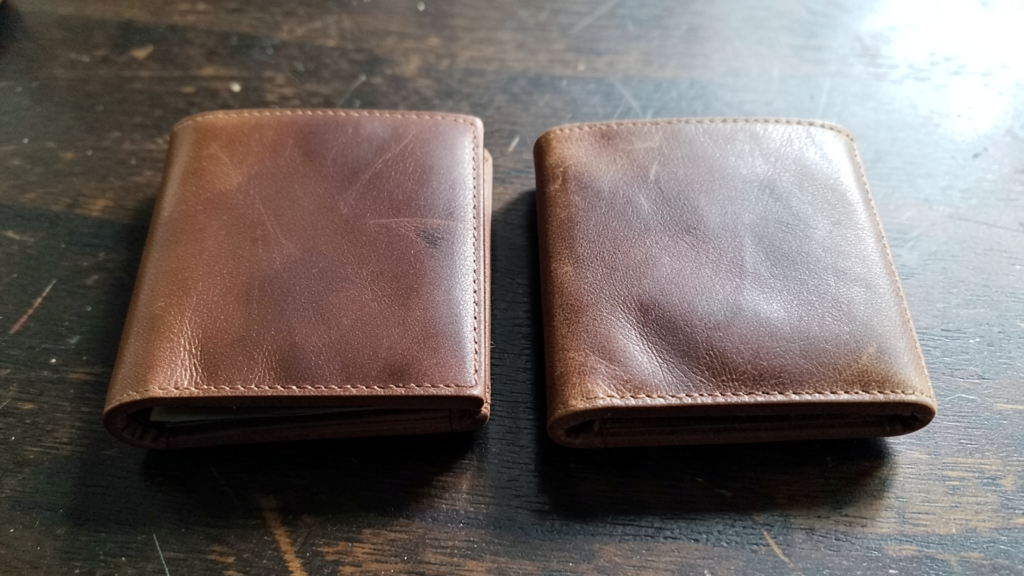
Bifold vs trifold wallet, in one sentence: a bifold folds once and opens like a book. A trifold folds twice and opens in three panels. That single difference decides how thick the wallet sits in a pocket, how many cards it holds, and how fast you reach a note. Both shapes live in our mens leather wallets, and the right one depends on what you actually carry.
How each one is built
A bifold has two panels: a long note compartment along the spine, and card slots stacked on each side, usually three to four per side. A trifold adds a third panel, which means more card slots for the same footprint when closed, but three layers of leather stacked instead of two. Empty, a bifold is roughly 11 by 9 cm and a trifold 12 by 9 cm, but the trifold is noticeably deeper front to back. Both shapes appear in our mens leather wallets.
Thickness, the real deciding factor
- Bifold, six cards: around 15 to 18 mm thick once loaded.
- Trifold, twelve cards: around 25 to 30 mm, with the bulk concentrated in the middle.
- Both hold notes flat, unlike a coin purse or a cardholder.
- A trifold sits better in a jacket pocket, a bifold in a back pocket.
If the wallet lives in a back pocket all day, thickness matters more than capacity, and a wallet with vertical card slots beats both shapes.
Capacity and daily use
A trifold typically carries ten to fourteen cards against six to eight for a bifold, and gives easier access because the panels fan out. A bifold shows its whole content in one gesture, which is faster at a till. In practice, the choice comes down to how many cards you truly use: most people carry four to six and store the rest, in which case the bifold stays flatter and looks neater in the hand. A wallet with vertical card slots splits the difference.
Which pocket, which bag
A bifold slips into a back trouser pocket or the inside pocket of a jacket. A trifold is wider when open and thicker when closed, so it works better in a coat pocket or in a bag. If you carry a leather messenger bag daily, the thickness question loses most of its weight and capacity can win.
What our catalogue shows
Across our wallet references, bifold models outnumber trifolds by a wide margin, and the reviews explain why: buyers mention the back pocket and the flat profile far more often than card count. Trifolds appear mostly in RFID blocking versions, where the extra panel houses the shielded layer. Both shapes come in cowhide and in PU leather, and the leather choice changes the thickness more than the fold does.
How to choose in two minutes
Count the cards you actually use each week. Up to six, a bifold stays flat and does the job. From seven to twelve, a trifold saves you from forcing the slots, at the cost of roughly a centimetre of thickness. Then look at where it rides: front trouser pocket means bifold; inside jacket pocket or a bag takes either. Finally, check coins: a snap coin pocket shows up more often on trifolds.
What wears out first
On both formats the fold line goes before anything else: the leather flexes there thousands of times a year. A thin, well tanned hide survives that better than a thick, stiff one, which is why tanning quality matters more than thickness on a wallet. Card slots come second, stretching permanently once you force two cards into one. Corner stitching comes third.
None of this is cheap to repair, so buy on the fold and the stitching rather than the slot count, and keep a spare leather wallet for travel instead of overloading the daily one.
Our wallet selection
- Mens leather wallets: the full range, both folds.
- Wallets with vertical card slots: when four cards and two notes are enough.
- Leather crossbody bags: for those who stopped carrying a wallet in a pocket.
Conclusion
Choose a bifold for a flat profile and fast access with six cards or fewer, and a trifold when you need twelve cards in a compact footprint and carry the wallet in a coat or a bag. If neither fits, the honest answer is to carry fewer cards. Browse our leather wallets to compare both folds.
Frequently asked questions
Which wallet is thinner?
The bifold, at equal card count, because it stacks two layers of leather instead of three.
Does a trifold hold more cards?
Yes, usually ten to fourteen against six to eight, thanks to the third panel.
Do notes fit flat in both?
Yes. Euro and dollar notes lie flat in both shapes without being folded again.
Which lasts longer?
The leather and the stitching decide, not the fold. A trifold has one more fold line to crease, which shows first on thin or coated leather.
