
Guides & Advice
How to Remove Mold from Leather and Keep It From Returning
Sep
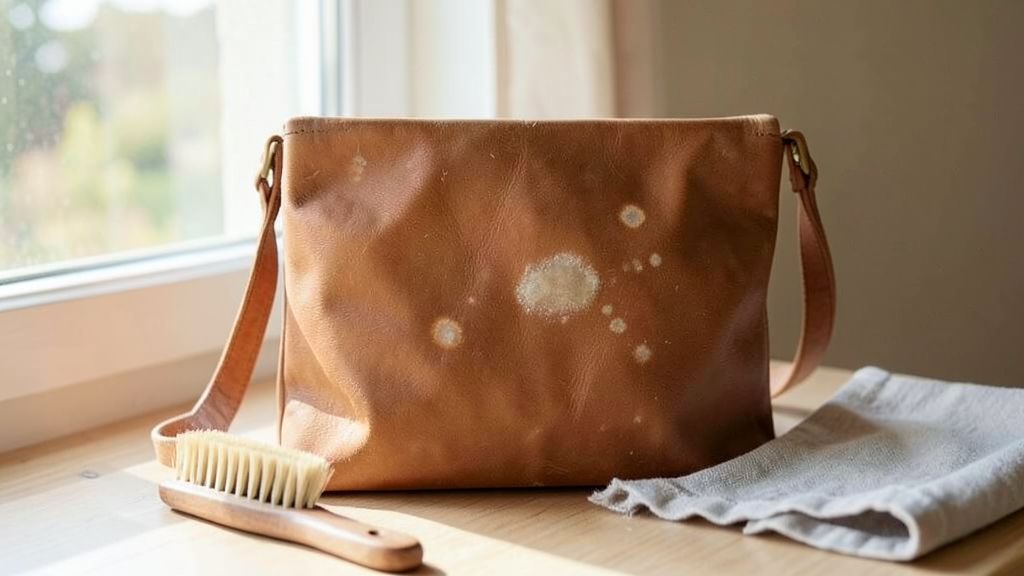
How to remove mold from leather comes down to one question: is it still on the surface? A white or greenish bloom that wipes off comes out with a dry brush, then diluted white vinegar, a slow dry and a conditioning coat. Black spots that stay after wiping mean the mold has reached the grain, and they will not fully disappear. A leather messenger bag forgotten in a basement or a closed car is the classic case. Here is how to treat it, and how to keep it from coming back.
Recognizing mold and how far it went
You can tell three stages apart by eye. A powdery white film that wipes away is fresh surface mold. Green or gray dots with a musty smell mean several weeks of growth. Black marks that stay after wiping mean the filaments are inside the leather. Do not confuse mold with fat bloom: on oily full grain leather, a white haze can be wax rising to the surface, and it melts away under a warm finger. A well oiled leather briefcase shows this often, and it needs no treatment at all.
Cleaning surface mold
Work outdoors or by an open window, so you do not spread spores around the room.
- Brush the bag dry with a soft brush, outside, to remove most spores.
- Mix equal parts water and white vinegar.
- Dampen a cloth lightly, wring it well, and wipe the whole surface, not just the spots.
- Treat the inside too: lining, pockets and seams, where mold settles first.
- Air dry in the shade, bag open, for at least twenty four hours.
- Condition with a neutral balm once the leather is fully dry.
Drying is the step people rush: leather closed while still damp grows mold again within days. Our guide on how to condition leather covers the last step.
When mold has set into the leather
Black marks that survive two vinegar passes mean the mold has stained the fibers. You can stop it growing, not erase the mark. An antifungal leather cleaner, then a leather repair shop for recoloring, are the only real options. On fabric lining, spot washing with soapy water works if it can be held away from the leather. For routine cleaning afterwards, see how to clean a leather bag.
Where mold on a bag comes from
Three conditions always line up: moisture, mild temperature and organic material. Leather covers the third on its own, and the oils from tanning feed the spores. That leaves moisture, which nearly always comes from one of these: a bag put away still damp after rain, a cellar or garage above roughly 65 percent relative humidity, a car trunk, a closet against a cold outside wall, or a bag sealed in plastic that traps evaporation. A leather messenger bag in daily use almost never molds, because it dries out between trips.
One point matters for everything that follows: spores are in the air everywhere, all the time. You do not eliminate them, you remove the conditions they need. That is why a perfect clean protects nothing if the bag goes back to the same spot.
Mold or fat bloom: telling them apart
A white haze on leather is not always mold. On oiled or waxed hide, waxes migrate to the surface when the temperature drops and form an even, odorless film across the whole piece. Run a warm finger over it, or a hair dryer held far away on its lowest setting: the wax melts and the leather goes uniform again. Mold forms irregular patches, often in clusters, smells musty, and never disappears with heat.
The difference matters, because treating fat bloom with vinegar dries the leather for nothing, and treating mold with a hair dryer only sets it deeper. Our guide on how to condition leather covers the bloom case.
Protect your lungs while you clean
Dry brushing throws spores into the air. Work outdoors or on a balcony, and wear a mask if you are asthmatic or allergic. Use disposable gloves, and wash the cloths at 60 degrees afterwards instead of reusing them as they are. If the bag came out of a heavily affected space, a cellar or an attic, take out whatever was stored beside it too: mold never grows on one item alone. Check the other leather bags stored in the same place.
Treating the lining and the smell
The lining of a leather briefcase holds the smell far longer than the hide does. Once cleaning is done and the bag is completely dry, put a cloth pouch filled with baking soda inside, close the bag and leave it three to seven days. Baking soda traps odor compounds without wetting anything. Repeat if the smell lingers. Activated charcoal in a sachet does the same job and recharges in sunlight.
What not to do: spray an air freshener, which adds a smell without removing the cause, or store the bag with a perfumed product, which masks mold that is still active. If the smell comes back after a few days in a closed bag, drying was not complete: open it, air it again, and check the lining at the seams and the bottom, the two areas that dry last.
What never to use
| Product | Why to avoid it |
|---|---|
| Bleach | it discolors and burns the grain, and does nothing for the lining |
| Pure alcohol | it kills spores but dries and cracks the leather |
| Hair dryer or heater | heat shrinks and stiffens leather |
| Plastic storage bags | they trap moisture, the root cause of mold |
Even a men’s leather wallet kept in a damp drawer can grow mold. The surface is small, the treatment is the same.
Storing a leather bag so it never molds
- A dry, ventilated spot, never a basement, garage or car trunk.
- A breathable cotton dust bag or an old pillowcase, never plastic.
- Tissue paper inside to hold the shape and absorb moisture.
- A silica gel pack in the main pocket for storage over several months.
- Fresh air once a season, bag open.
Conditioned leather resists better: dry, cracked grain gives spores gaps to settle into. A leather messenger bag carried often rarely molds. Long storage is what creates the risk.
Our leather bags, built to last
- Leather messenger bags: tanned and finished for daily use.
- Leather briefcases: fabric lining that is easy to air out.
- Travel bags: large volumes, best stored empty and open between trips.
See all leather messenger bags
Conclusion
Mold on leather cleans up well while it stays on the surface: brush outdoors, diluted white vinegar, slow drying, then balm. Once set in, it can be stopped but leaves a mark. The real fix is storage: dry, ventilated, in cotton. If yours is past saving, browse our leather messenger bags.
FAQ
Does white vinegar damage leather?
Diluted by half and wrung out well, no. Neat or in excess, it dries the grain. Conditioning after drying makes up for it.
Will mold come back after cleaning?
Yes, if the bag goes back to the same damp spot or is closed before it is dry. Spores are always in the air.
Is it safe to use a bag that had mold?
Yes, once cleaned and dry. If a smell lingers, leave it open outdoors for a few days with baking soda in a cloth pouch inside.
Can PU leather get moldy?
Mold grows mostly on the lining and seams of a PU leather bag. The coating itself wipes clean with a damp cloth.
