
Guides & Advice
What Is Pebbled Leather? Milled, Embossed and Natural Grain
Sep
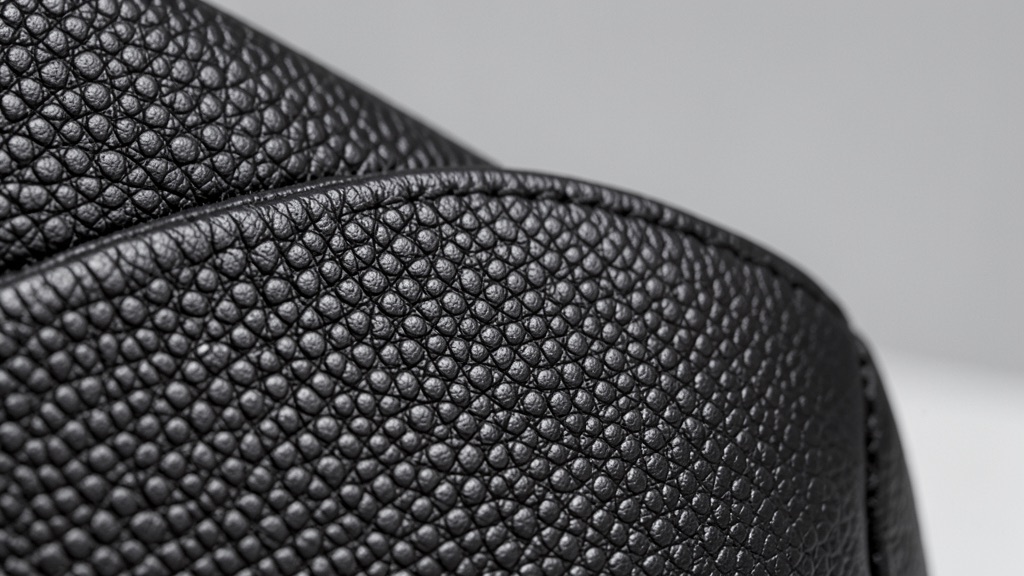
What is pebbled leather? The name describes a hide whose surface carries a raised, rounded grain, like a field of small pebbles. The texture can be natural to the animal, raised in a drum, or pressed in with a steel plate, and that origin decides how the bag ages far more than the look does. This guide explains where the grain comes from, how to tell the three apart, why the relief hides wear so well, and how to care for it. Several models in our leather shoulder bags for men use this finish.
On this page:
Where the grain comes from ·
Milled, embossed or natural ·
Why it hides wear ·
What it does less well ·
Caring for pebbled leather ·
Against saffiano and full grain
Where the pebble grain comes from
Three routes produce it, and they have nothing in common beyond the result. Milling, also called tumbling, rotates a damp hide in a drum for hours until the fibers contract and the grain rises on its own. Embossing presses a heated steel plate onto a sanded hide. Some hides, finally, carry a coarse grain naturally.
Only milling and the natural grain keep the top layer intact, the way a full grain leather does. Embossing requires sanding the surface first, which removes the densest fibers of the hide before printing a pattern over the damage.
Milled, embossed or natural: telling them apart
| Origin | Pattern | Layer used |
|---|---|---|
| Milled in the drum | irregular, varies across the panel | top layer, intact |
| Embossed | repeats exactly every few centimetres | sanded top layer, or split |
| Natural grain | irregular, follows the animal | top layer, intact |
Compare two areas a hand’s width apart on the same panel. Pebbles that line up identically were printed. Edges tell the rest of the story: a split hide shows a visible layer line under the coating. Our guide to full grain vs top grain leather explains what that sanding costs in durability.
Why pebbled leather hides wear so well
Smooth leather shows every scratch, because light crosses a flat surface and any score interrupts it. A raised grain scatters that light in all directions, so marks disappear into the texture within a step or two of viewing distance.
- Scratches land on the crests and stay invisible from a metre away.
- Rain marks spread unevenly across the relief and read as texture rather than as stains.
- Shape holds better, because the grain stiffens the panel slightly without a heavy lining.
- Grip improves, and the strap slides off a shoulder less easily.
Those four reasons explain why the finish dominates bags that travel every day, including most of our men’s briefcases.
What pebbled leather does less well
Dust, hand cream and polish collect in the hollows, so the surface dulls faster than a smooth finish and needs brushing rather than wiping. A deep cut is also harder to repair: any filler flattens the grain locally, and the flat patch catches the eye more than the original cut did.
The disguise problem
Embossing is cheap and hides a multitude of faults. A heavily corrected split can be pressed with a convincing pebble and sold as textured leather. The grain therefore proves nothing about quality on its own, which is why the cut edge matters more than the surface. Check it before trusting a leather laptop bag for men that looks textured in photographs.
Caring for pebbled leather
- Brush the hollows with a soft dry brush before anything else, since wiping only moves dust deeper.
- Condition two to three times a year with a cream worked in with a cloth, then buff the crests.
- Use very little product. A thick coat settles in the hollows and dries white.
- Let a wet bag dry in open air, away from any heat source.
Our guide on how to condition leather covers product choice, and how to clean a leather bag handles stains that reach the bottom of the grain.
Pebbled against saffiano and full grain
Saffiano is also a pressed texture, but its pattern is a fine cross-hatch applied to a coated hide, which makes it scratch resistant and rigid. Pebbled milled leather stays supple and ages; saffiano stays exactly as bought until the coating fails. Plain full grain shows the animal’s own surface and marks easily, which some buyers want and others cannot tolerate.
Which to choose for a daily bag
Milled pebbled leather is the safest compromise: it hides wear, keeps its shape and still develops a patina. Choose smooth full grain if the marks themselves are the appeal, as they are with the finish covered in our guide to crazy horse leather.
We recommend milled pebbled hides over embossed ones, and we accept that the difference is invisible in a photograph. That is precisely why we insist on it: a pressed grain lets a corrected split pass for a textured leather, and the buyer only discovers the difference when the coating lifts. When we cannot establish how a grain was obtained, we describe the bag by its layer rather than by its texture, even though texture sells better.
Our selection: bags in grained leather
- Leather messenger bags for men, for daily commuting.
- Black leather bags for men, where the grain reads best.
- Leather crossbody bags for men, the compact format.
See all leather briefcases for men
Conclusion
Pebbled leather is a hide with a raised rounded grain, milled in a drum, pressed with a plate, or natural to the animal. Judge the origin rather than the texture, since only a milled or natural grain keeps the top layer intact, and feed it sparingly to keep the hollows clean. Browse our leather satchels for men or read our guide to vegetable tanned leather.
Frequently asked questions
Is pebbled leather real leather?
Yes, it is a hide. The pebble is a texture rather than a material, so it can sit on an intact full grain hide or on a heavily corrected split.
Is pebbled leather durable?
Milled on a top layer hide, very. Embossed on a split, the coating wears out like any corrected grain, usually starting at the flex points.
Does pebbled leather scratch?
It scratches like any leather, but the relief scatters light and the marks stay far less visible than on a smooth finish.
How do you clean pebbled leather?
Brush the hollows dry first, then use a barely damp cloth and a thin coat of cream. Soaking leaves rings that follow the grain.
Pebbled or saffiano leather: what is the difference?
Saffiano is a fine cross-hatch pressed into a coated hide, rigid and highly scratch resistant. Pebbled milled leather stays supple and develops a patina instead of staying identical.
How can you tell if pebbled leather is embossed?
Compare two areas a hand’s width apart. An identical repeating pattern means a plate was used, while a milled grain varies across the panel.
