
Guides & Advice
How to clean a backpack without ruining it, step by step
Sep
How to clean a backpack without ruining it comes down to one decision made before anything gets wet: identify the material. Technical nylon, cotton canvas and leather do not wash the same way, and a washing machine destroys two of those three. Empty the bag first, side pockets included, and keep it dry while you work out what it is made of. If yours has reached the end of its life, our men’s backpack range holds models that are far easier to look after.
Identify the material first
The inner label answers the question most of the time. Without one, three clues are enough. Fabric that shines slightly and slips under a finger is synthetic, nylon or polyester. Matt, thick fabric that drinks a drop of water in seconds is cotton canvas. A soft material that darkens when wet and returns to its shade as it dries is leather, and leather never takes a full wash.
The detail that decides everything is the water repellent finish. Many synthetic packs carry an invisible coating that makes water bead. One machine cycle with ordinary detergent strips it, and the bag then soaks up rain like a sponge. The models concerned are mostly those in our waterproof backpack range.
Hand cleaning, the method that suits everything
It takes twenty minutes and destroys no finish. Empty the pack, open every zip, shake it upside down outdoors. Vacuum the inside with a brush head: that is what lifts the sand and crumbs water would turn into mud.
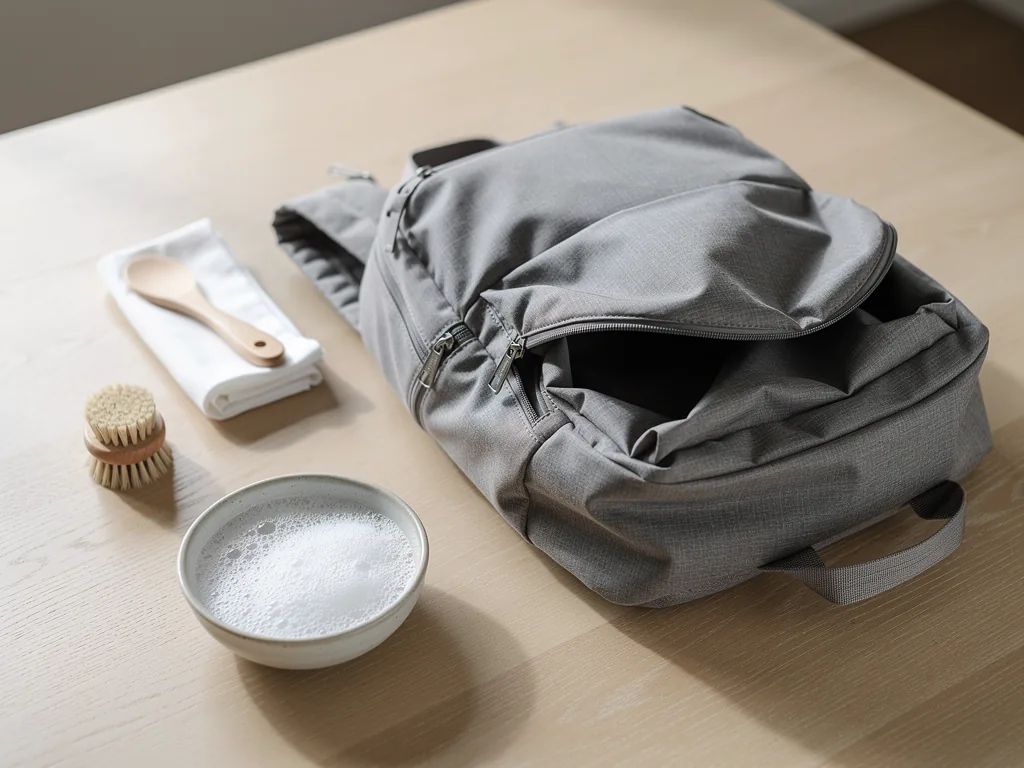
Then prepare lukewarm water, never hot, with one drop of mild soap. Work zone by zone with a non abrasive sponge, spending most of the time on the straps and the back panel, where sweat concentrates. Rinse with a clean sponge and never submerge the bag: water that reaches the back foam takes days to leave and holds a stubborn smell. This is the method for a work pack such as those in the laptop backpack range, whose padded sleeve copes badly with water.
The machine, in three cases only
A machine suits a nylon or polyester pack with no rigid frame, no padded sleeve and no leather trim. Three conditions, all of them required. Put the bag inside a closed pillowcase, cold programme, minimum spin, liquid detergent and no fabric softener. Softener clogs the fibres and removes whatever repellency is left.
A framed pack, a hard shell travel bag or a model from the travel backpack range does not go in a machine: the drum deforms the structure, and a bent frame never straightens again.
Stains and smells, case by case
A grease stain is treated dry, with absorbent clay left overnight and then brushed off. Ink comes out with cotton soaked in surgical spirit, dabbing and never rubbing. Mould calls for equal parts water and white vinegar, followed by a full dry in sunlight, the only way to stop the spores.
For smell alone, baking soda left twenty four hours inside the closed bag absorbs most of it. A thickly lined anti theft pack, such as those in the anti theft backpack range, needs two passes rather than one, the lining holding more moisture.
Drying, the step most people get wrong
Drying decides the result. Hang the bag upside down, every zip open, in a ventilated room out of direct sun. Never a tumble dryer, never a radiator, never long exposure to full sun: heat shrinks stitching and lifts coatings. Allow twenty four to forty eight hours depending on how thick the back panel is.
A pack stored damp grows mould within three days, and the smell that follows never fully leaves. That is the most common reason backpacks are thrown out early, long before the fabric wears through. A model from the travel backpack range, usually put away the moment you get home, is the first at risk.
Leather, a separate case
A leather pack is not washed, it is maintained. A dry cloth for dust, a barely damp cloth for a fresh mark, then a colourless conditioning cream twice a year. Water in quantity leaves permanent tide marks, and ordinary soap strips the oils that keep the hide supple. The same rules apply to the bags in the work backpack range.
Choosing a pack that is easier to keep clean
A bag with a pale lining, no thick foam and no leather trim cleans up in ten minutes. Three ranges meet that test, depending on use.
- See the men’s backpacks, the widest selection, all uses combined.
- See the waterproof backpacks, whose surface rinses without soap.
- See the laptop backpacks, with a separate sleeve that keeps dirt away from the machine.
In short
Identify the material, then clean by hand with lukewarm water and mild soap: that method suits every pack and damages none. Keep the machine for soft synthetics with no frame and no leather, and always dry in open air, upside down, zips open. For a bag no longer worth the effort, the men’s backpack range holds models built to last.
Frequently asked questions
Can you clean a backpack with a pressure washer?
No. The pressure lifts coatings, opens stitching and drives water into the back foam. A low pressure hose is the acceptable limit, and only on an unpadded synthetic pack.
How long does a backpack take to dry?
Twenty four hours for a thin model, up to forty eight for a padded one. The reliable test is pressing the back foam between two fingers: any coolness at all means it is not finished.
How often should a backpack be cleaned?
A full clean twice a year is enough for daily city use. A monthly vacuum and a wipe of the straps after any hot spell prevent most smells.
Does a dishwasher work for a backpack?
No, and it is a bad idea that keeps circulating. The temperature goes beyond what technical fabric tolerates, and the detergents are far too harsh for a lining and its zips.
