
Quality signed by Sacoche Monsieur
Leather Conditioning Balm with Mink Oil and Beeswax
€14.90
The bag designed for active men who want to stay organized, stylish and efficient every day.
Stock intentionally limited to maintain our quality standards.

Secure Payments

Free Returns

SAV - réponse sous 24 heures
📞 Any questions? Our customer service team, based in France, replies within 24h by email or phone.

If it's not what you expected,
you can change your mind without justifying yourself. No hidden conditions.
🎁 Included with your bag:
-
Digital guide “the organized man” (9 € value)
-
Checklist “perfect organization” (11 € value)
Total bonus value: 20 €, free today
Why Sacoche Monsieur outperforms the alternatives
| Criteria | Sacoche Monsieur | Other e-commerce sites |
|---|---|---|
| Material quality | Selected premium materials | Variable quality, standard industrial production |
| Quality control | Premium check before shipping | Standard industrial control |
| Warranty | Manufacturer warranty included | Often limited or absent |
| Bonuses included | Exclusive bonuses included depending on the offer | Generally no bonus |
| Free return | Return within 30 days (conditions apply) | Rare or paid |
| Support | Dedicated customer service, fast reply | International support with variable delays |
| Price positioning | Premium range, from entry-level to luxury | Mostly entry-level or marketplace |
| Perceived value | Higher than the price paid thanks to the included services | Often equivalent to the price paid |
| Brand & image | Specialized brand dedicated to modern men | Marketplace or generic brand |

Description
Leather does not wear out, it dries out
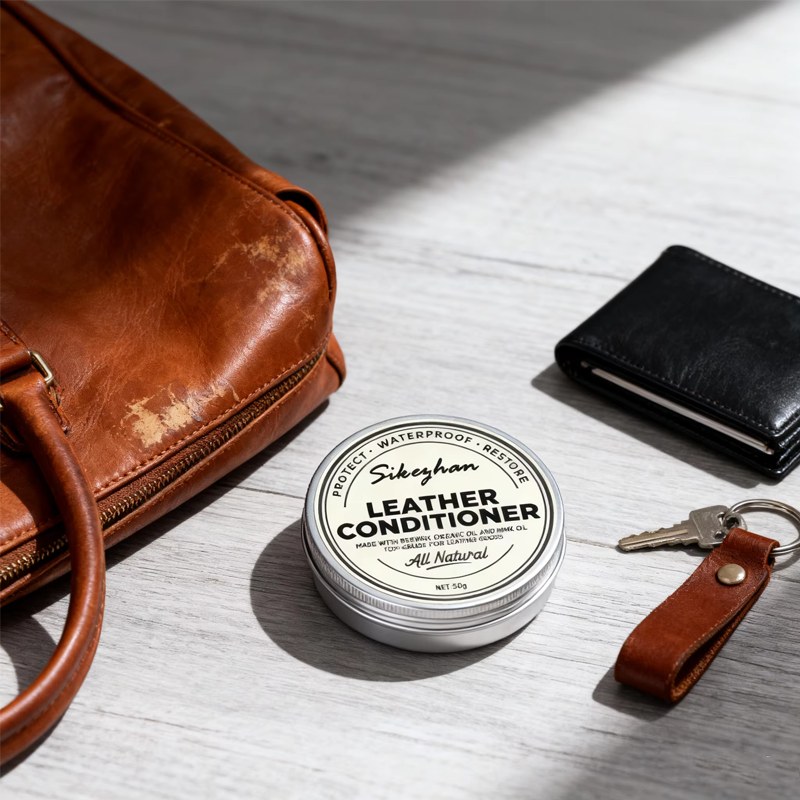
A bag that has spent a winter outdoors first loses its depth of colour, then starts to mark along the folds, exactly where the leather flexes every time you open the flap. Nothing is broken. The leather is simply thirsty, and fed leather recovers its colour and its suppleness in a single application.
Mink oil and beeswax, not a shoe polish
Polish colours the surface and makes it shine. A conditioning balm goes in: mink oil gives the leather back the fat it has lost, beeswax leaves a film on the surface that pushes water away without sealing the material. That is the difference between covering up a leather and looking after it.
It also works on PU leather, and that matters
Most bags on the market, including very good ones, are made of PU leather. This balm is applied the same way on both materials: it feeds the surface, revives the tone and leaves the same water protection. You therefore do not need to know exactly what you are holding in order to care for it properly.
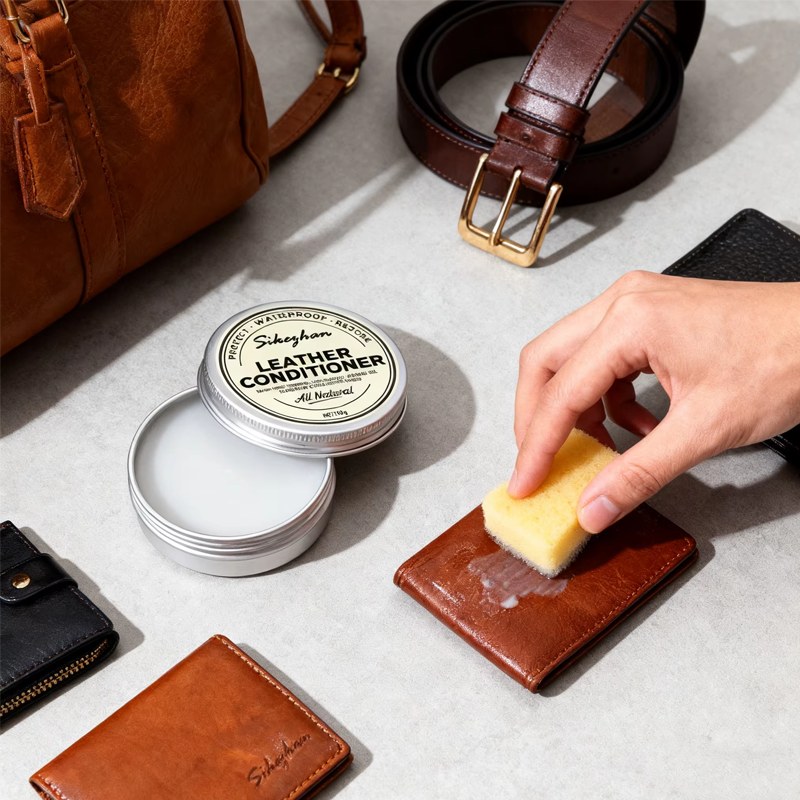
How to apply it, in three minutes
A dry cloth, or slightly damp for a bag coming back from the city.
A hazelnut-sized amount covers a whole side. The leather takes what it needs, the rest would leave a greasy deposit.
Ten minutes, then a clean cloth in circular movements. The shine comes from buffing, not from the quantity.
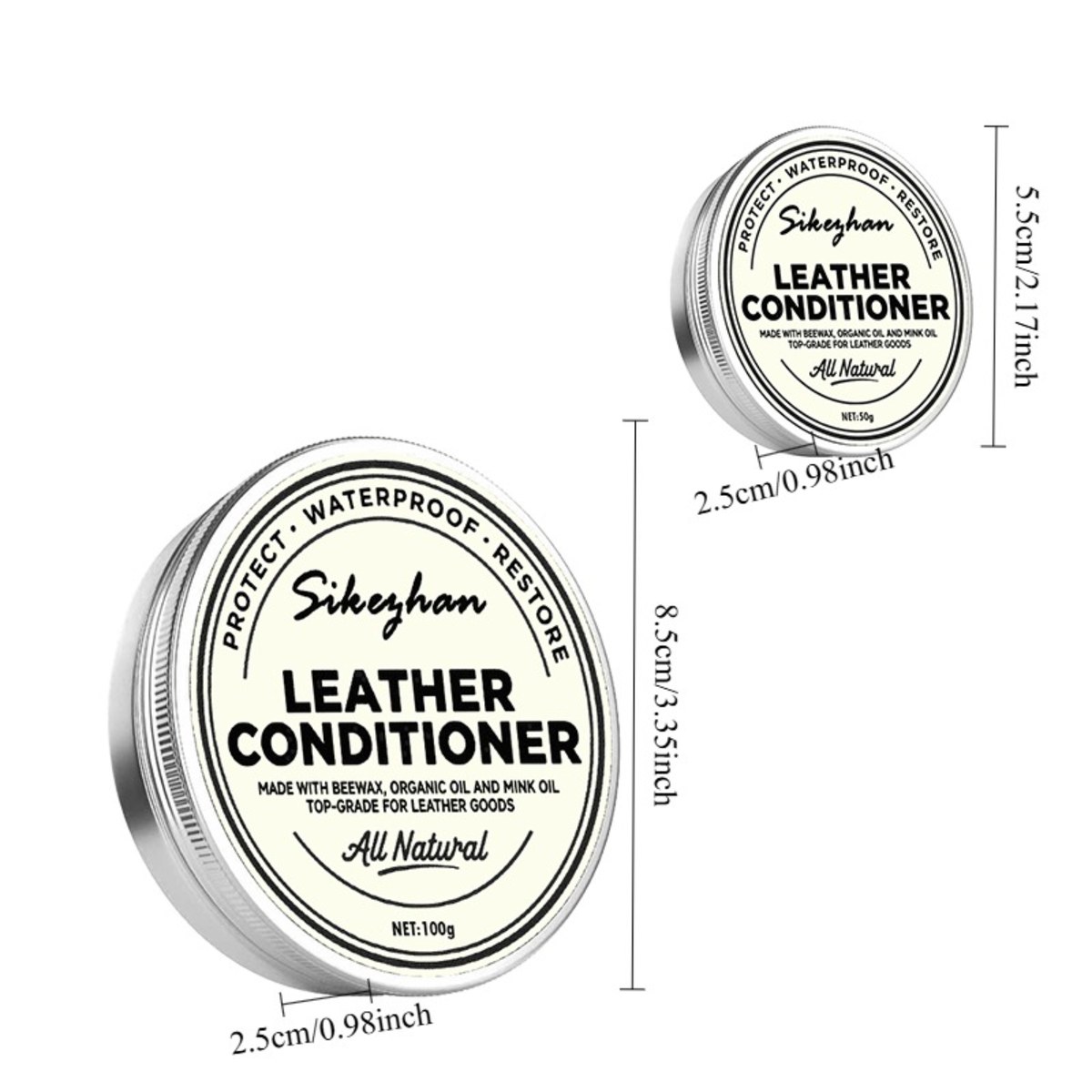
Two sizes, two uses
The 50 g tin fits in a desk drawer and is plenty for one bag treated three or four times a year. The 100 g becomes worthwhile as soon as there are several pieces at home: bag, belt, city shoes and jacket all share the same care.
What not to use it on
Avoid suede and nubuck: those leathers are worked with a brush and an eraser, and any grease flattens their nap. On light leather, test on a hidden area first, a balm always darkens the tone slightly.
Informations complémentaires
| Size | 100 g, 50 g |
|---|
Avis (0)
FAQ
We work to prepare your order with care and to make the products as quickly as we can. Delivery within mainland France usually takes between 5 and 15 working days, averaging 8 days.
For the rest of the world, delivery may take a few extra working days.
Our team works to speed up this process without compromising the quality of our products, so that you receive your order as quickly as possible. We do everything we can to shorten these times.
Once your item or items have shipped, you will receive a confirmation email with a link to track your order with the carrier.
If you need to change the delivery details after placing your order, please contact us as soon as possible. Delivery details, in particular the delivery address, can no longer be changed once the order has shipped.
Please note that delivery details for orders placed with PayPal can no longer be changed once the order is confirmed.
At present we can only handle one delivery address per order. To have your items sent to different addresses, please place one order per delivery address.
Sacoche Monsieur accepts the following payment methods for online purchases:
*PayPal payment is not available in Saudi Arabia, Kuwait and Qatar.
**Bank transfer cannot be used to buy personalised items.
When you place an order, your billing address must match the details linked to your payment method. If your payment is declined, please contact your bank for assistance.
If you need to cancel or change your order, please contact us through the contact form as soon as possible. We will do everything we can to meet your request, but we cannot guarantee that an order can be changed once it has been placed. After payment has been approved, orders can no longer be cancelled or changed; you may return your item in line with the Sacoche Monsieur online returns policy.
Once placed, orders for made-to-order or personalised items cannot be cancelled or changed. The sale of these items is final and they cannot be returned.
Returns and exchanges are possible within 30 days of the delivery date, by sending your items back via carrier to the address that will be given by email; that address must appear on the return label. Return shipping costs are paid by the customer.
For more information, please contact our customer service team. You can email us at the following address: [email protected]
One of our advisers will reply within 24 hours and give you all the instructions needed to arrange a refund.
Goods returned by post to our warehouse will be processed within 14 working days of receipt. You will receive a confirmation email once your return has been approved. Refunds are credited to the original payment method. Additional charges for Saturday delivery are not refundable.
Produits similaires

Avis
Il n’y a encore aucun avis