
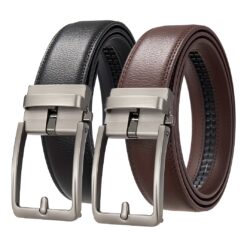
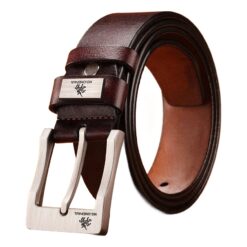
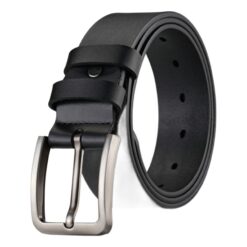
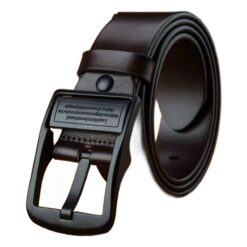
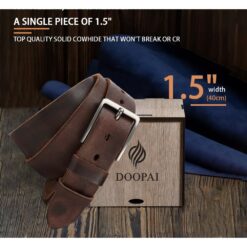
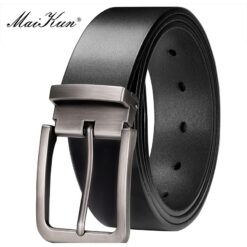
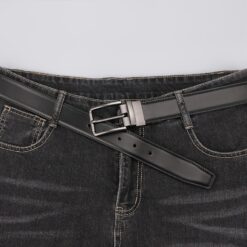
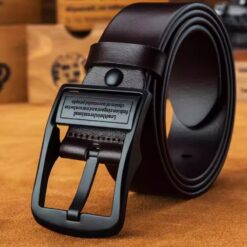
Why choose full grain leather
- The top layer of the hide is the densest part, so it bends at the buckle for years instead of cracking along the fold.
- It takes on a patina with wear, which means the belt looks better after a year rather than tired.
- Marks and scratches settle into the surface rather than lifting a coating off it.
- One honest belt covers most of a wardrobe, so you stop buying a replacement every season.
How to choose your belt
Start with the grade, because the words look similar and the results do not. Full grain keeps the natural surface of the hide. Top grain is sanded and coated for an even finish. Bonded leather is offcuts pressed together, and it is what fails first. Each product page states what it uses, so read it rather than judging by the look of a photograph.
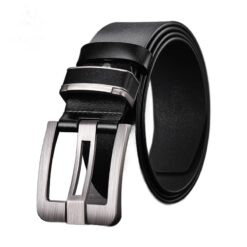
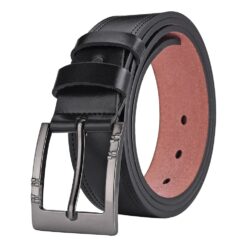
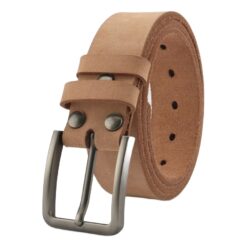
Then pick the width, which decides where the belt belongs. A narrow belt with a slim frame buckle reads formal and slips through the loops of tailored trousers. A wider belt with a heavier buckle suits denim and chinos, and looks out of place with a suit. If you own both kinds of trousers, you want both kinds of belt.
Size last, and size from a belt rather than from your waistband. Lay out a belt you already wear, measure from the fold at the buckle to the hole you actually use, and match that figure to the sizing on the product page. Buying by trouser size is the most common reason a belt arrives too long. Finish by matching color to your shoes, and check the buckle attachment: stitched or screwed keepers can be serviced, glued ones cannot.
Frequently asked questions
What does full grain actually mean?
It is leather that keeps the outer surface of the hide, with nothing sanded away to hide imperfections. That surface is the strongest part, which is why it wears in rather than out.
What size belt should I order?
Measure an existing belt from the buckle fold to the hole you use, then compare that with the sizing on the product page. Do not order by trouser size, which runs shorter than the belt you need.
How wide should a belt be?
Narrow for tailoring and dress shoes, wider for jeans and boots. The width is given on each product page, so check it against the trousers you plan to wear it with.
Black or brown?
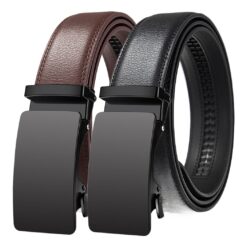
Match the belt to your shoes first. Black covers formal wear and dark suits, brown and tan sit better with denim, chinos and business casual.
How do I care for a leather belt?
Hang it rather than coiling it in a drawer, let it dry away from direct heat if it gets wet, and condition it lightly once or twice a year. Rotating between two belts makes both last longer.