
What the leather changes
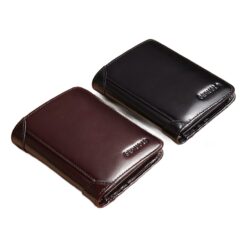
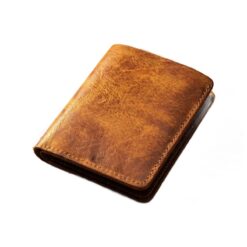
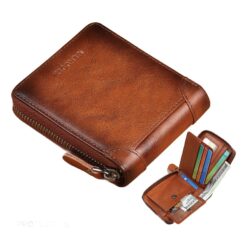
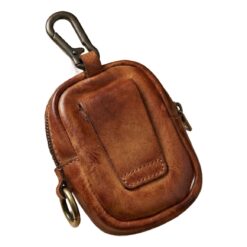
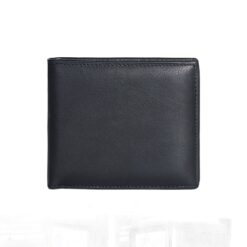
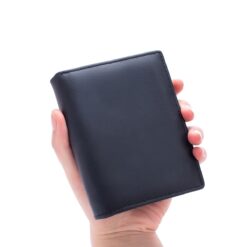
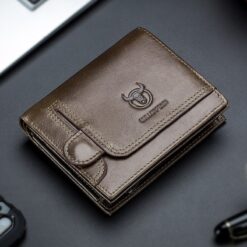
Full grain cowhide keeps the intact top layer of the hide and deepens in colour with use. Waxed crazy horse leather lightens wherever it rubs, then blends the mark back into the patina. Bonded leather, by contrast, is leather dust bound in resin: it peels at the fold within a year or two, which is why it appears on no wallet listed here.
RFID blocking, and what it actually protects
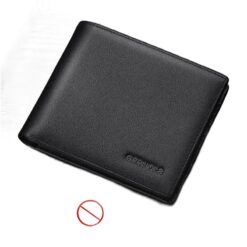
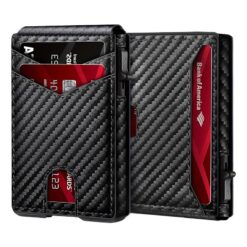
A metallic layer in the lining blocks remote reading of the contactless cards stored inside the wallet. It has no effect on a card left elsewhere, and none on a phone. The protection is passive, needs no battery and does not wear out.
How many cards before it stops being slim
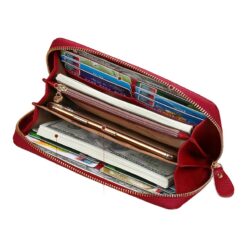
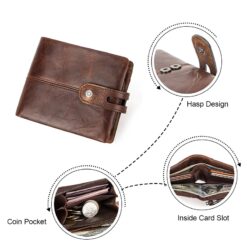
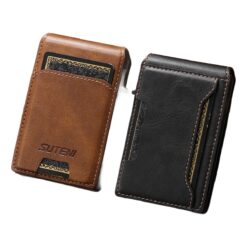
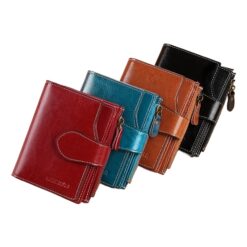
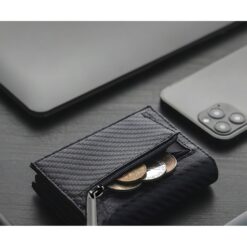
Six to eight cards keep a bifold flat. Beyond that the fold is forced, the leather marks at the hinge and the wallet starts to deform the pocket it lives in. A trifold or a zip around carries eight to twelve without that penalty, at the cost of thickness.
Frequently asked questions
Which wallet format is the slimmest?
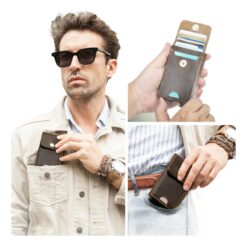
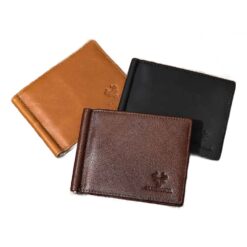
A money clip wallet, which drops the note compartment entirely. Three to six cards and a few notes held flat against the leather.
Does a leather wallet stretch?
Full grain leather relaxes slightly over the first months, mostly at the card slots. The fold itself does not stretch, it wears.
Is RFID blocking worth it?
The risk is low but real in crowded transport, and the shielding costs nothing in bulk or in maintenance.
How do you care for a leather wallet?
Dust it with a dry cloth, and apply a colourless cream twice a year in a thin layer. Avoid water based cleaners on a waxed finish.